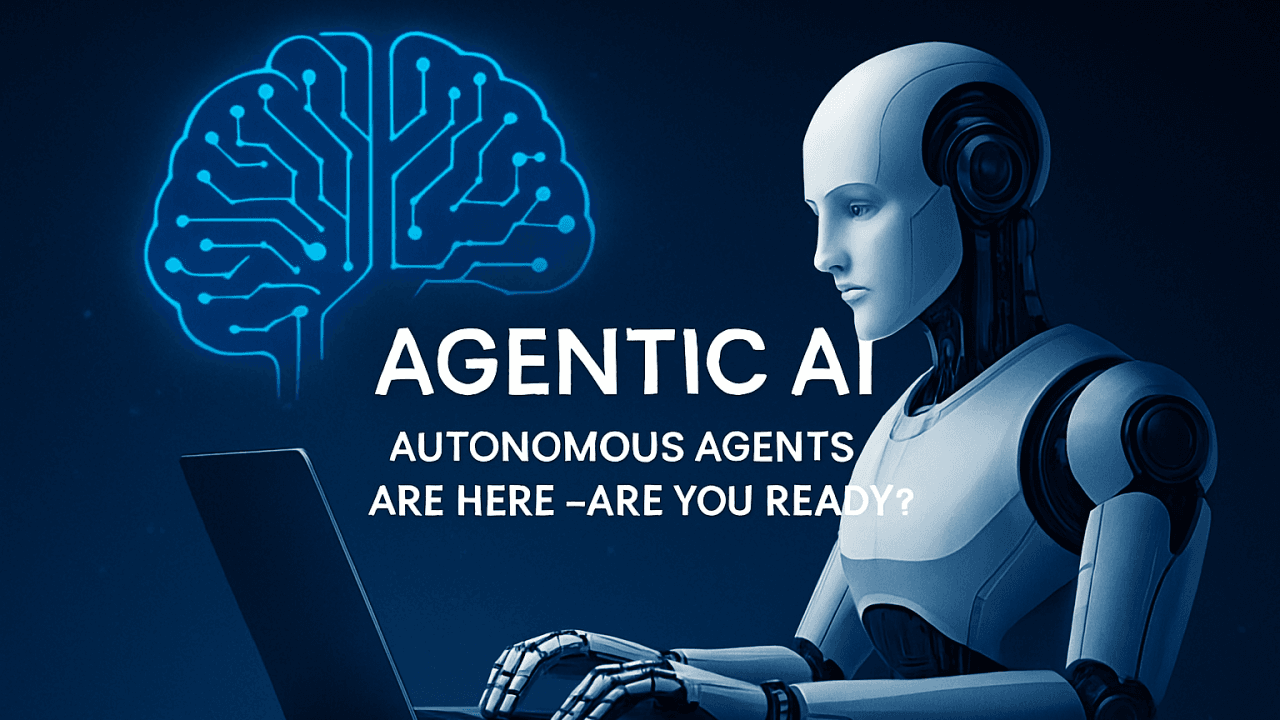

Executive Summary: Agentic AI is no longer science fiction. We're witnessing the rapid evolution of AI from passive assistants to autonomous agents capable of planning, deciding, and acting with limited human oversight. This report dives deep into this transformative technology, exploring its potential, risks, and ethical implications.
What is Agentic AI? Unlike traditional AI, which performs specific tasks on command, agentic AI can perceive its environment, set goals, plan strategies, and execute actions to achieve those goals. Think of it as AI with its own internal drive and decision-making capabilities. Examples include AI-powered customer service agents that resolve complex issues independently, autonomous research assistants that conduct experiments and analyze data, and even AI-driven supply chain managers that optimize logistics in real-time.
Key Players:
- OpenAI: Leading the charge with models capable of complex reasoning and planning, paving the way for truly autonomous agents.
- Anthropic: Focused on building AI systems that are safe, reliable, and beneficial, crucial for ensuring responsible agentic AI development.
- Google: Leveraging its vast data resources and AI expertise to create agents that can learn and adapt to new environments.
- Numerous Startups: A burgeoning ecosystem of startups is emerging, each with unique approaches to building and deploying agentic AI.
Potential Benefits:
- Increased Productivity: Automate complex tasks, freeing up human workers for more creative and strategic work.
- Improved Efficiency: Optimize processes in real-time, leading to significant cost savings and resource optimization.
- Accelerated Innovation: Enable faster research and development cycles, leading to breakthroughs in various fields.
- Enhanced Decision-Making: Analyze vast amounts of data to identify patterns and insights that humans might miss, leading to better decisions.
Risks and Challenges:
- Lack of Transparency: Understanding how agentic AI makes decisions can be challenging, raising concerns about bias and accountability.
- Job Displacement: Automation of tasks performed by human workers could lead to widespread job losses.
- Security Vulnerabilities: Autonomous agents could be susceptible to hacking and manipulation, potentially leading to unintended consequences.
- Ethical Concerns: Ensuring that agentic AI aligns with human values and ethical principles is crucial to prevent harm.
- The Alignment Problem: Ensuring that AI's goals are aligned with human goals and values is a critical challenge.
Ethical Considerations:
- Bias Mitigation: Developing techniques to identify and mitigate bias in agentic AI systems.
- Explainability: Making AI decision-making processes more transparent and understandable.
- Accountability: Establishing clear lines of responsibility for the actions of autonomous agents.
- Safety and Security: Implementing robust security measures to prevent malicious use of agentic AI.
The Future of Agentic AI: The agentic AI revolution is just beginning. As AI models become more sophisticated and powerful, we can expect to see even more autonomous systems emerging across various industries. The key to unlocking the full potential of this technology lies in addressing the ethical and safety concerns proactively, ensuring that agentic AI is used for the benefit of humanity.
Call to Action:
- Stay Informed: Keep up-to-date on the latest developments in agentic AI.
- Engage in the Discussion: Participate in conversations about the ethical and societal implications of this technology.
- Support Responsible Development: Advocate for policies and practices that promote the safe and beneficial use of agentic AI.
Viral Snippets:
- "Agentic AI is here! Are you ready for robots running the world? #AIRevolution #AgenticAI"
- "Forget chatbots, meet autonomous agents! AI is about to get a whole lot smarter. #ArtificialIntelligence #FutureTech"
- "The rise of agentic AI: incredible potential, but also serious risks. Let's talk ethics! #AIethics #TechDebate"
Deep Dives Similar to This
A comprehensive overview of the current state of microservices architecture, including its benefits, challenges, and future trends, aimed at developers.
Discover the future of software architecture: Multi-Agent AI Orchestration. Learn how to design systems where AI agents act as parallel processors, collaborating to solve complex problems. Explore the essential skills, tools, and technologies to thrive in this new era.
A comprehensive report on Rust, its features, adoption trends, use cases, and its potential to become the new standard in performance and safety.