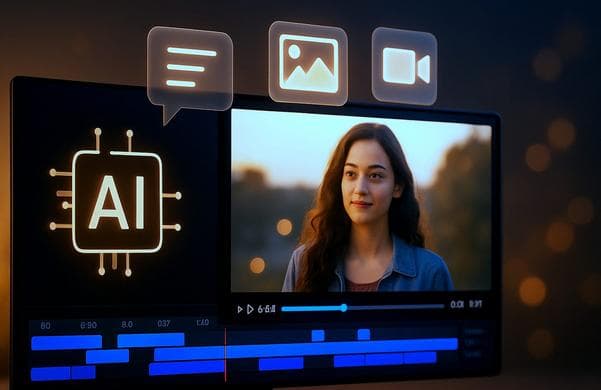

The Dawn of AI-Powered Video Creation
The world of video creation is undergoing a seismic shift, thanks to the rapid advancement of AI video generators. These tools, which transform text prompts into compelling video content, are no longer a futuristic fantasy but a tangible reality. This report dives deep into the current landscape of AI video generation, exploring its applications, challenges, and the potential impact on various industries.
What are AI Video Generators?
At their core, AI video generators utilize sophisticated machine learning algorithms, primarily deep learning models, to understand textual descriptions and translate them into visual narratives. Users input text prompts, and the AI generates video clips, animations, or even full-fledged videos, often incorporating stock footage, AI-generated visuals, and synthesized voices.
The Surge in Popularity: Why Now?
Several factors contribute to the explosive growth of AI video generators:
- Accessibility: Previously, video creation demanded specialized skills, expensive equipment, and significant time investment. AI tools democratize the process, enabling anyone to produce video content.
- Cost-Effectiveness: Compared to hiring professional video production teams or purchasing costly software licenses, AI video generators offer a significantly cheaper alternative.
- Speed and Efficiency: AI can generate videos in a fraction of the time required by traditional methods, allowing for rapid content creation and iteration.
- Improved AI Capabilities: Recent breakthroughs in AI, particularly in areas like natural language processing (NLP) and generative adversarial networks (GANs), have dramatically improved the quality and realism of AI-generated videos.
Key Applications Across Industries
AI video generators are finding applications across a diverse range of sectors:
- Marketing and Advertising: Creating engaging social media ads, explainer videos, and product demos.
- Education: Developing interactive learning materials and animated educational content.
- E-commerce: Generating product videos for online stores.
- News and Journalism: Producing visual summaries of news articles and events.
- Entertainment: Creating short films, music videos, and animated content.
- Internal Communications: Enhancing training videos and employee onboarding materials.
Prominent Players in the AI Video Generation Space
Several companies are leading the charge in AI video generation:
- Synthesia: Focuses on creating realistic AI avatars that deliver video messages.
- RunwayML: Offers a suite of AI tools for creative applications, including video generation and editing.
- Hour One: Specializes in AI-powered video creation for businesses, using realistic AI presenters.
- Pictory: Transforms long-form text content into engaging video snippets.
- Designs.ai: Provides a comprehensive AI-powered design platform with video generation capabilities.
Challenges and Limitations
Despite their potential, AI video generators still face several challenges:
- Quality and Realism: While rapidly improving, AI-generated videos can still sometimes appear artificial or uncanny.
- Creative Control: Users may have limited control over the specific details of the generated video.
- Copyright and Ownership: The legal implications of AI-generated content, particularly concerning copyright, are still being debated.
- Bias and Representation: AI models can inherit biases from the data they are trained on, potentially leading to skewed or unfair representations in generated videos.
- Ethical Considerations: Concerns exist about the potential misuse of AI-generated videos for malicious purposes, such as creating deepfakes.
The Future of AI Video Generation
The future of AI video generation is bright, with continued advancements expected in the following areas:
- Increased Realism and Fidelity: AI-generated videos will become increasingly indistinguishable from real-world footage.
- Enhanced Creative Control: Users will have more granular control over the creative process, allowing for highly customized videos.
- Integration with Other AI Tools: AI video generators will seamlessly integrate with other AI tools, such as image generators and voice synthesizers.
- Personalized Video Experiences: AI will enable the creation of highly personalized video experiences tailored to individual viewers.
- Automation of Video Editing: AI will automate many of the tedious tasks involved in video editing, freeing up human editors to focus on more creative aspects.
Conclusion
AI video generators are poised to revolutionize the way video content is created and consumed. While challenges remain, the rapid pace of innovation suggests that these tools will become increasingly powerful and versatile in the years to come. As AI continues to evolve, expect to see even more creative and innovative applications emerge, transforming how we communicate, learn, and entertain ourselves through video.
Deep Dives Similar to This
A comprehensive overview of the current state of microservices architecture, including its benefits, challenges, and future trends, aimed at developers.
Discover the future of software architecture: Multi-Agent AI Orchestration. Learn how to design systems where AI agents act as parallel processors, collaborating to solve complex problems. Explore the essential skills, tools, and technologies to thrive in this new era.
A comprehensive report on Rust, its features, adoption trends, use cases, and its potential to become the new standard in performance and safety.