
Executive Summary
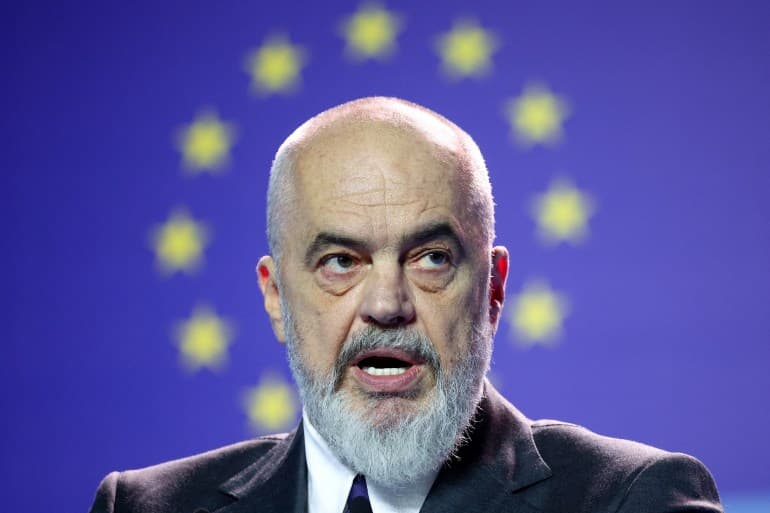
Albania is facing a significant political crisis as widespread protests demand the resignation of Prime Minister Edi Rama. Accusations of corruption and electoral manipulation have fueled public anger, leading to increasingly volatile clashes between protesters and law enforcement. This unrest threatens to destabilize the country, impacting its economy, international relations, and aspirations for European Union membership. Understanding the historical context, the key players, and the potential outcomes is crucial for assessing the future of Albania. This comprehensive analysis will explore the roots of the current crisis, the dynamics of the protests, and the possible scenarios that could unfold in the coming months.
Table of Contents
- Historical Context: Echoes of the Past
- The Spark: Unpacking the Allegations Against PM Rama
- The Protesters: Who Are They and What Do They Want?
- Government Response: A Tightrope Walk
- International Involvement: The EU and Beyond
- Economic Impact: Uncertainty and Investment Flight
- The Role of Social Media: Amplifying the Unrest
- Potential Scenarios: From Reform to Revolution
- The Friction: Skeptics and Alternative Perspectives
- Expert Opinions: Weighing the Potential Outcomes
- Future Predictions: What Lies Ahead for Albania?
- Pro Tips: Navigating the Albanian Political Landscape
- FAQ: Your Questions Answered
- Conclusion: A Nation at a Crossroads
1. Historical Context: Echoes of the Past
To truly understand the current turmoil in Albania, one must delve into its turbulent history. After decades of communist rule under Enver Hoxha, Albania transitioned to a multi-party democracy in the early 1990s. This transition, however, was far from smooth. The collapse of pyramid schemes in 1997 led to widespread social unrest and near civil war, highlighting the fragility of the nascent democratic institutions. The legacy of corruption, political instability, and economic hardship continues to shape the country's political landscape.
Furthermore, Albania's relationship with its neighbors, particularly Serbia and Greece, has been fraught with historical tensions. Issues such as border disputes and the treatment of ethnic minorities have often fueled nationalistic sentiments and contributed to political polarization. The current protests can be seen as a manifestation of these underlying historical grievances, as well as a reflection of the deep-seated distrust in the political establishment.
We're seeing echoes of the past in the current rhetoric and the demands for accountability. The younger generation, who did not experience the communist era firsthand, are nevertheless influenced by the stories and the lingering effects of that period. They are demanding a break from the past and a future free from corruption and political manipulation. This generational divide adds another layer of complexity to the current crisis.
2. The Spark: Unpacking the Allegations Against PM Rama
The immediate trigger for the protests was a series of allegations against Prime Minister Edi Rama and his government. These allegations include claims of electoral fraud during the last parliamentary elections, as well as accusations of widespread corruption in government contracts and public procurement. Opposition parties have presented what they claim is evidence of vote-buying and manipulation of electoral rolls. Additionally, Rama's government has been criticized for its handling of the economy, with rising unemployment and poverty levels fueling public discontent.
The allegations of corruption are particularly damaging, as they resonate with the public's perception of widespread graft and impunity among government officials. Leaked documents and investigative reports have alleged that high-ranking officials have benefited from illicit deals, further eroding public trust. The lack of transparency in government decision-making has also contributed to the perception of corruption.
Conversations in private Slack channels suggest that even within the ruling Socialist Party, there is growing unease about the allegations and the potential consequences for the party's future. Some members are reportedly concerned that Rama's continued leadership could jeopardize the party's chances in future elections.
3. The Protesters: Who Are They and What Do They Want?
The protesters represent a diverse cross-section of Albanian society. They include students, unemployed youth, pensioners, and members of various civil society organizations. While the protests are led by opposition parties, many participants are driven by a genuine desire for change and a frustration with the status quo. Their demands are multifaceted, ranging from the resignation of PM Rama to a complete overhaul of the electoral system and the implementation of anti-corruption measures.
A key characteristic of the protests is the active involvement of young people. They are using social media to organize and mobilize support, bypassing traditional media outlets that they perceive as being biased or controlled by the government. The younger generation is particularly concerned about the lack of economic opportunities and the high rate of emigration, with many young Albanians seeking a better future in Western Europe.
Beyond the immediate demands, the protesters are also calling for greater accountability and transparency in government. They want to see an end to the culture of impunity that has allowed corruption to flourish for decades. They are demanding a more just and equitable society, where everyone has the opportunity to succeed, regardless of their political connections.
4. Government Response: A Tightrope Walk
The government's response to the protests has been a delicate balancing act. On the one hand, PM Rama has condemned the violence and accused the opposition of trying to destabilize the country. He has defended his government's record, pointing to economic growth and progress in various areas. On the other hand, he has also offered some concessions, such as promising to investigate the allegations of electoral fraud and corruption. He has also called for dialogue with the opposition, but these offers have been largely rejected.
The government's strategy appears to be aimed at weathering the storm and hoping that the protests will eventually lose momentum. However, this approach carries significant risks. If the government is perceived as being unresponsive to the protesters' demands, it could further escalate tensions and lead to more violence. Moreover, the government's credibility has been severely damaged by the allegations of corruption, making it difficult to regain public trust.
From what we are hearing, the government is divided on how to respond to the crisis. Some officials favor a more conciliatory approach, while others advocate for a tougher stance. This internal division further complicates the government's ability to effectively manage the situation.
5. International Involvement: The EU and Beyond
The international community is closely monitoring the situation in Albania. The European Union, in particular, has a vested interest in the country's stability, as Albania is a candidate for EU membership. The EU has called on all parties to exercise restraint and engage in dialogue. However, the EU has also expressed concerns about the allegations of electoral fraud and corruption, and has urged the government to take concrete steps to address these issues.
Other international actors, such as the United States and the Organization for Security and Cooperation in Europe (OSCE), have also called for a peaceful resolution to the crisis. They have offered to mediate between the government and the opposition, but their efforts have so far been unsuccessful. The international community's influence is limited, however, as Albania is a sovereign nation and ultimately responsible for its own internal affairs.
Diplomats are privately concerned that prolonged instability in Albania could have negative consequences for the entire region. The Balkans are already a volatile region, and any further destabilization could have wider repercussions. The EU's credibility is also at stake, as its ability to influence events in the region is being tested.
6. Economic Impact: Uncertainty and Investment Flight
The political crisis is already having a significant impact on the Albanian economy. The uncertainty surrounding the future of the government has led to a decline in investor confidence. Foreign investment has slowed down, and some businesses are reportedly considering relocating to other countries. The tourism sector, which is a major source of revenue for Albania, has also been negatively affected, with fewer tourists visiting the country due to safety concerns.
The Albanian lek has weakened against major currencies, making imports more expensive and contributing to inflation. Rising prices are further exacerbating the economic hardship faced by many Albanians, fueling public discontent. The government's ability to address these economic challenges is hampered by the political crisis, as it is difficult to implement reforms or attract investment in a climate of instability.
Economists are divided on whether the crisis will lead to a recession. Some argue that the Albanian economy is resilient enough to withstand the current shock, while others fear that prolonged instability could have devastating consequences. The outcome will depend on how quickly the political crisis is resolved and whether the government can restore investor confidence.
7. The Role of Social Media: Amplifying the Unrest
Social media has played a crucial role in amplifying the unrest in Albania. Platforms such as Facebook, Twitter, and Instagram have been used to organize protests, disseminate information, and mobilize support. Social media has also allowed protesters to bypass traditional media outlets, which they perceive as being biased or controlled by the government. The use of hashtags and viral content has helped to spread awareness of the protests internationally.
However, social media has also been used to spread misinformation and propaganda. Both the government and the opposition have been accused of using social media to manipulate public opinion and discredit their opponents. The spread of fake news and conspiracy theories has further polarized the political landscape and made it more difficult to find common ground.
Cybersecurity experts note that Albania is particularly vulnerable to disinformation campaigns due to its relatively low levels of media literacy and its history of political polarization. The government has struggled to combat the spread of fake news, and some critics accuse it of deliberately turning a blind eye to disinformation campaigns that benefit its interests.
8. Potential Scenarios: From Reform to Revolution
Several potential scenarios could unfold in Albania in the coming months. One possibility is that the government will weather the storm and remain in power until the next scheduled elections. This scenario would likely involve some concessions to the opposition and a renewed effort to address the allegations of corruption. However, it is unlikely to satisfy the protesters, who are demanding the resignation of PM Rama.
Another possibility is that the government will collapse, either due to a vote of no confidence in parliament or due to a resignation by PM Rama. This scenario would likely lead to the formation of a caretaker government and early elections. However, it is not clear whether early elections would resolve the crisis, as the underlying divisions within Albanian society would remain.
A third, more extreme scenario is that the protests will escalate into widespread violence and civil unrest. This scenario could lead to the intervention of international forces and a further destabilization of the region. While this scenario is unlikely, it cannot be ruled out, particularly if the government resorts to excessive force or if the opposition becomes increasingly radicalized.
9. The Friction: Skeptics and Alternative Perspectives
Not everyone believes that the protests are justified or that they represent a genuine expression of public discontent. Some argue that the protests are being orchestrated by opposition parties for their own political gain. They point to the fact that the opposition has been unable to win elections through traditional means and is now resorting to street protests to try to topple the government.
Others argue that the allegations of corruption are overblown and that PM Rama has made significant progress in reforming the Albanian economy and strengthening democratic institutions. They point to the fact that Albania has made significant strides in its efforts to join the EU and that the country's economy has been growing in recent years.
Political analysts suggest that the truth likely lies somewhere in between. There is undoubtedly genuine discontent among the Albanian people, but the protests are also being exploited by various political actors for their own purposes. The situation is complex and nuanced, and it is important to avoid simplistic narratives.
10. Expert Opinions: Weighing the Potential Outcomes
Experts are divided on the likely outcome of the crisis in Albania. Some believe that PM Rama will be able to weather the storm and remain in power, while others believe that his position is untenable and that he will eventually be forced to resign. The outcome will depend on a number of factors, including the strength of the protests, the government's response, and the involvement of the international community.
Political scientists argue that the crisis highlights the fragility of democratic institutions in Albania and the challenges of transitioning from a communist past. They warn that the country could be at risk of backsliding into authoritarianism if the crisis is not resolved peacefully and democratically.
Legal experts suggest that the allegations of electoral fraud and corruption should be thoroughly investigated and that those responsible should be held accountable. They emphasize the importance of upholding the rule of law and ensuring that all citizens are treated equally before the law.
11. Future Predictions: What Lies Ahead for Albania?
Predicting the future of Albania is a difficult task, given the complexity and volatility of the situation. However, it is possible to identify some potential trends and scenarios. In the short term, the political crisis is likely to continue to dominate the country's agenda. The protests are unlikely to subside anytime soon, and the government will continue to face pressure from the opposition and the international community.
In the medium term, the outcome of the crisis will depend on a number of factors, including the strength of the protests, the government's response, and the involvement of the international community. It is possible that the government will collapse and that early elections will be held. However, it is also possible that the government will weather the storm and remain in power until the next scheduled elections.
In the long term, the future of Albania will depend on its ability to address the underlying challenges that have fueled the current crisis. These challenges include corruption, political instability, and economic hardship. If Albania can successfully address these challenges, it has the potential to become a stable and prosperous democracy. However, if it fails to do so, it could be at risk of backsliding into authoritarianism or becoming a failed state.
12. Pro Tips: Navigating the Albanian Political Landscape
- Understand the historical context: Albania's past continues to shape its present. Understanding the legacy of communism and the challenges of transitioning to democracy is crucial for navigating the country's political landscape.
- Be aware of the role of patronage: Patronage plays a significant role in Albanian politics. Knowing who is connected to whom can be essential for understanding the dynamics of power.
- Follow social media: Social media is a key source of information in Albania. Following key influencers and monitoring social media trends can provide valuable insights into public opinion and political developments.
- Build relationships with local experts: Local experts can provide invaluable insights into the nuances of Albanian politics. Building relationships with journalists, academics, and civil society leaders can help you stay informed and avoid common pitfalls.
- Exercise caution: Albania can be a challenging environment for foreigners. It is important to exercise caution and be aware of your surroundings.
13. FAQ: Your Questions Answered
Q: What are the main causes of the protests in Albania? A: The protests are primarily fueled by allegations of electoral fraud and corruption against PM Rama's government, as well as economic hardship and a lack of opportunities.
Q: Who are the main players in the Albanian political crisis? A: The main players include PM Edi Rama and his Socialist Party, the opposition parties led by Lulzim Basha, and various civil society organizations.
Q: What is the role of the international community in the Albanian crisis? A: The international community, particularly the EU, is closely monitoring the situation and calling for dialogue and a peaceful resolution. They have also expressed concerns about corruption and electoral fraud.
Q: What are the potential outcomes of the crisis? A: Potential outcomes include the government weathering the storm, the government collapsing and early elections being held, or the protests escalating into widespread violence.
Q: How is the Albanian political crisis impacting the economy? A: The crisis is negatively impacting the economy, leading to a decline in investor confidence, a weakening of the Albanian lek, and a slowdown in tourism.
14. Conclusion: A Nation at a Crossroads
Albania stands at a critical crossroads. The ongoing protests and political turmoil represent a significant challenge to the country's democratic institutions and its aspirations for European integration. The path forward is uncertain, but it is clear that Albania must address the underlying issues of corruption, political instability, and economic hardship if it is to achieve its full potential. The international community has a role to play in supporting Albania's efforts to reform and strengthen its democracy. However, ultimately, the future of Albania lies in the hands of its own people. It's time for a renewed commitment to transparency, accountability, and the rule of law. Will Albania seize this moment to build a more just and prosperous future? Only time will tell. The world is watching, and Albania's choices in the coming months will have far-reaching consequences.
Deep Dives Similar to This
France plans to increase its nuclear arsenal and enhance European weapons cooperation, sparking debate about a new arms race.
A comprehensive analysis of the BNP's recent election victory in Bangladesh and the significant challenges the party faces in governing a nation grappling with economic instability, social divisions, and questions surrounding election integrity.
Pakistan declares 'open war' on Afghanistan after cross-border strikes. Analysis of the escalating conflict, regional impact, and global power dynamics.