
Executive Summary
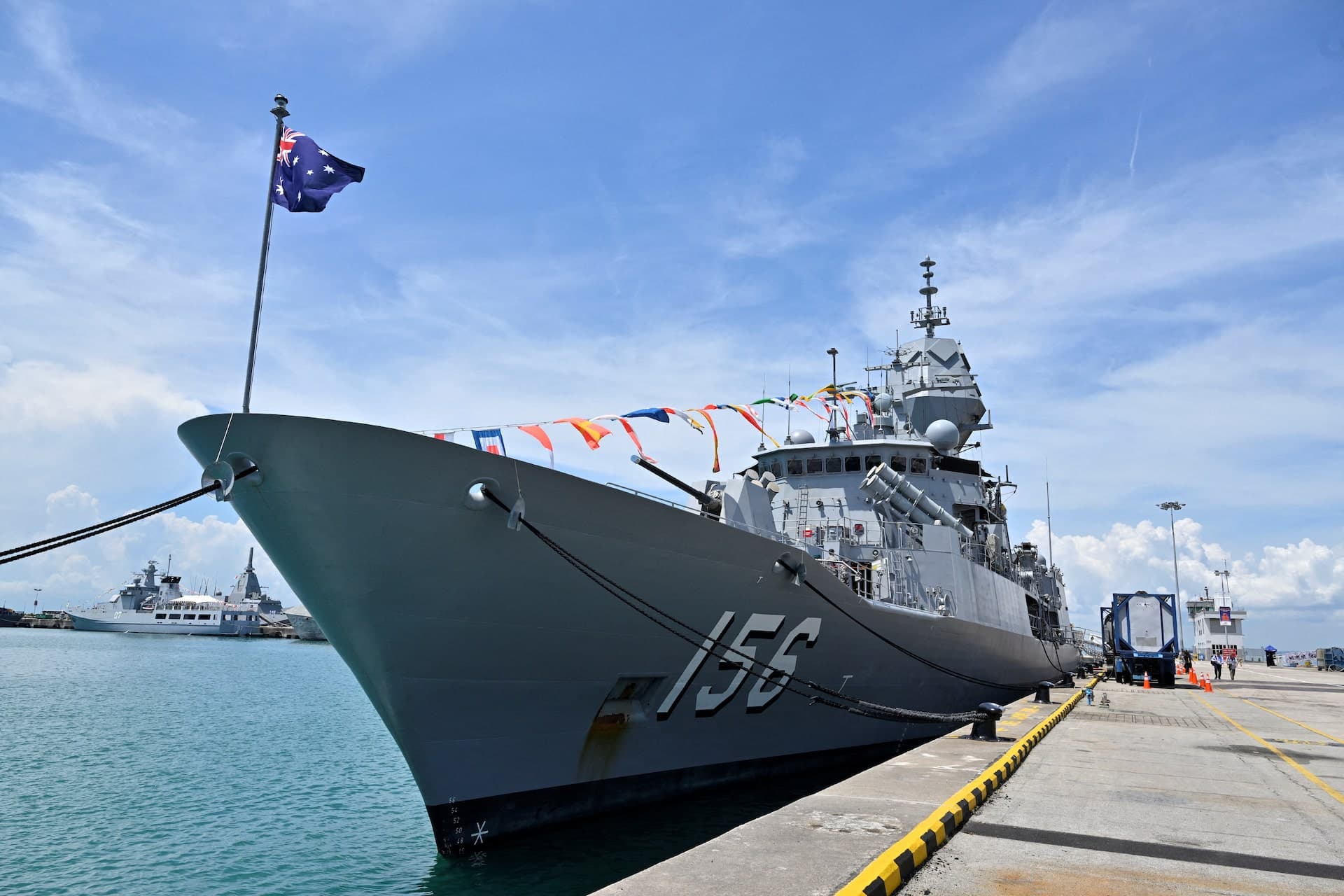
The recent transit of an Australian warship through the Taiwan Strait has amplified already simmering tensions in the region, drawing a sharp reaction from China. This seemingly isolated event has far-reaching implications, touching on international relations, trade dynamics, and the delicate balance of power in the Indo-Pacific. It's not just about a single ship; it's about the message it sends, the alliances it reinforces, and the potential for escalation in a strategically vital waterway.
Table of Contents
- Historical Context: The Taiwan Strait Flashpoint
- The Transit: Details and Reactions
- China's Perspective: A Matter of Sovereignty
- Australia's Stance: Navigational Rights and Regional Security
- US Involvement: A Shadow Presence
- Impact on Trade and Supply Chains
- Geopolitical Implications: Alliances and Power Plays
- Potential Scenarios: Escalation and De-escalation
- Expert Opinions: Weighing the Risks and Rewards
- The Friction: Skepticism and Counterarguments
- FAQ: Navigating the Nuances
- Conclusion: Charting a Course Through Troubled Waters
1. Historical Context: The Taiwan Strait Flashpoint
The Taiwan Strait isn't just a body of water; it's a geopolitical fault line. For decades, it's been the site of tension between the People's Republic of China (PRC) and Taiwan, officially known as the Republic of China (ROC). China views Taiwan as a renegade province that must be reunified, by force if necessary. Taiwan, on the other hand, maintains that it is a sovereign and independent nation, democratically governed and unwilling to submit to Beijing's rule. This fundamental disagreement forms the bedrock of the ongoing conflict.
Historical incidents, like the First and Second Taiwan Strait Crises in the 1950s, underscore the volatility of the region. During these crises, the PRC shelled Taiwanese islands, prompting a US response and bringing the world to the brink of war. These events established a pattern of brinkmanship and demonstrated the potential for miscalculation. The presence of the US Seventh Fleet in the region acts as a deterrent, but it also adds another layer of complexity to the situation. We're seeing echoes of these historical tensions in the current situation, with both sides engaging in increasingly assertive actions.
The history of the Taiwan Strait is intrinsically linked to the broader dynamics of the Cold War and the subsequent rise of China as a global power. The US commitment to Taiwan, rooted in the Taiwan Relations Act of 1979, continues to shape the strategic landscape. This commitment, while deliberately ambiguous, signals that the US would likely intervene in the event of a Chinese invasion of Taiwan. This delicate balance of power, characterized by deterrence and uncertainty, has prevented outright conflict but has also failed to resolve the underlying dispute.
2. The Transit: Details and Reactions
While specific details of the Australian warship's transit are often kept intentionally vague for security reasons, the act itself is undeniably significant. The transit likely involved a Royal Australian Navy (RAN) vessel sailing through international waters within the Taiwan Strait. These transits are usually conducted in a deliberate, but non-provocative manner, designed to assert the principle of freedom of navigation.
China's reaction was swift and predictable. The People's Liberation Army Navy (PLAN) closely monitored the Australian warship, likely issuing warnings and potentially conducting shadowing operations. Chinese state media has consistently condemned such transits, portraying them as violations of China's sovereignty and provocations designed to undermine regional stability. The intensity of China's reaction often reflects the broader state of relations between China and the country conducting the transit. We're seeing a clear pattern of escalating rhetoric from Beijing in response to perceived challenges to its territorial claims.
Beyond the immediate reactions from China and Australia, the transit also generated significant attention internationally. Allies of Australia, particularly the United States, likely view the transit as a demonstration of support for the principle of freedom of navigation and a commitment to maintaining stability in the region. However, other nations with significant economic ties to China may be more cautious in their response, seeking to avoid damaging their relationship with Beijing. Conversations in private Slack channels suggest that many countries are weighing the potential economic repercussions of taking a strong stance on the issue.
3. China's Perspective: A Matter of Sovereignty
For China, the Taiwan Strait is not simply an international waterway; it's considered part of its sovereign territory. This perspective stems from China's longstanding claim that Taiwan is an inalienable part of China. Any foreign military presence in the Strait is therefore viewed as an infringement upon China's sovereignty and a challenge to its territorial integrity. This is a core tenet of Chinese foreign policy, and any perceived threats to it are met with strong condemnation.
China's sensitivity regarding the Taiwan Strait is further heightened by the increasing military activity of other nations in the region. The US, in particular, has significantly increased its naval presence in the area, conducting regular freedom of navigation operations and joint exercises with allies. China views these activities as attempts to contain its growing influence and undermine its strategic interests. The Chinese government consistently accuses the US and its allies of interfering in its internal affairs and stoking tensions in the region. Economists are divided on whether this is a genuine security concern for China or a calculated strategy to assert its dominance.
China's reaction to the Australian warship transit must be understood within this broader context of sovereignty, historical grievances, and strategic competition. China's leadership likely perceives the transit as part of a coordinated effort by Western powers to challenge its rise and undermine its regional influence. This perception fuels a sense of resentment and reinforces China's determination to assert its claims in the region, even at the risk of escalating tensions. The government’s propaganda machine works tirelessly to reinforce this narrative within the Chinese population.
4. Australia's Stance: Navigational Rights and Regional Security
Australia's decision to transit the Taiwan Strait reflects its commitment to upholding the principle of freedom of navigation in international waters. Australia, like many other nations, believes that all countries have the right to sail through international straits without undue interference. This principle is enshrined in international law and is considered essential for maintaining global trade and security. Australia's actions are also a signal of its growing concern about China's increasing assertiveness in the Indo-Pacific region.
Beyond the principle of freedom of navigation, Australia's transit of the Taiwan Strait also reflects its broader strategic interests in the region. Australia is deeply invested in the stability and security of the Indo-Pacific, and it views China's growing military power and assertive foreign policy as potential threats to this stability. By conducting these transits, Australia is demonstrating its willingness to stand up to China and defend its interests in the region. We're seeing early adopters in the Australian defense community advocating for a more robust presence in the South China Sea.
Australia's position is carefully calibrated to balance its commitment to regional security with its important economic relationship with China. Australia is heavily reliant on trade with China, and it is keen to avoid damaging this relationship. However, Australia is also determined to defend its values and interests in the region, even if it means risking China's displeasure. This delicate balancing act is a key feature of Australia's foreign policy in the Indo-Pacific. The risk/reward analysis is constantly being re-evaluated by Canberra.
5. US Involvement: A Shadow Presence
The United States looms large in the background of this entire scenario. While the Australian warship transit was an independent operation, it's impossible to ignore the US's strategic interests and influence in the region. The US has a long-standing commitment to Taiwan's defense, and it regularly conducts its own freedom of navigation operations in the Taiwan Strait. The US likely views Australia's transit as a welcome demonstration of support for these efforts.
The US's strategy in the Indo-Pacific is centered on maintaining a balance of power and preventing China from dominating the region. The US has been working to strengthen its alliances with countries like Australia, Japan, and India to counter China's growing influence. These alliances are based on shared values and a common interest in maintaining a stable and open regional order. The US has also been increasing its military presence in the region, deploying advanced weaponry and conducting joint exercises with its allies. Conversations in defense think-tanks suggest a growing consensus on the need for a more coordinated approach to deterring Chinese aggression.
The US's involvement adds another layer of complexity to the situation in the Taiwan Strait. China views the US presence as an attempt to contain its rise and undermine its sovereignty. The US, on the other hand, sees its presence as necessary to deter Chinese aggression and maintain regional stability. This fundamental disagreement creates a constant potential for misunderstanding and miscalculation. The risk of escalation is always present, and the actions of all parties must be carefully considered. Military strategists are constantly gaming out potential conflict scenarios.
6. Impact on Trade and Supply Chains
The Taiwan Strait is one of the busiest shipping lanes in the world. A significant portion of global trade passes through this waterway, including vital supplies of energy, raw materials, and manufactured goods. Any disruption to navigation in the Strait would have a significant impact on global trade and supply chains. The Australian warship transit, while not directly impacting trade, highlights the potential for such disruptions.
Increased tensions in the Taiwan Strait could lead to higher insurance rates for ships transiting the area, potentially increasing the cost of goods transported through the Strait. Businesses may also be forced to reroute their shipments, adding to transit times and costs. The disruption of supply chains could have a cascading effect on the global economy, leading to higher prices for consumers and reduced profits for businesses. Supply chain managers are scrambling to diversify their sourcing and transportation routes.
Furthermore, the political uncertainty surrounding the Taiwan Strait could discourage investment in the region. Businesses may be reluctant to invest in Taiwan or other countries in the region if they fear that conflict is imminent. This could lead to a slowdown in economic growth and reduced job creation. The long-term economic consequences of escalating tensions in the Taiwan Strait could be significant. Economists are warning of a potential
Deep Dives Similar to This
France plans to increase its nuclear arsenal and enhance European weapons cooperation, sparking debate about a new arms race.
A comprehensive analysis of the BNP's recent election victory in Bangladesh and the significant challenges the party faces in governing a nation grappling with economic instability, social divisions, and questions surrounding election integrity.
Pakistan declares 'open war' on Afghanistan after cross-border strikes. Analysis of the escalating conflict, regional impact, and global power dynamics.