
Executive Summary
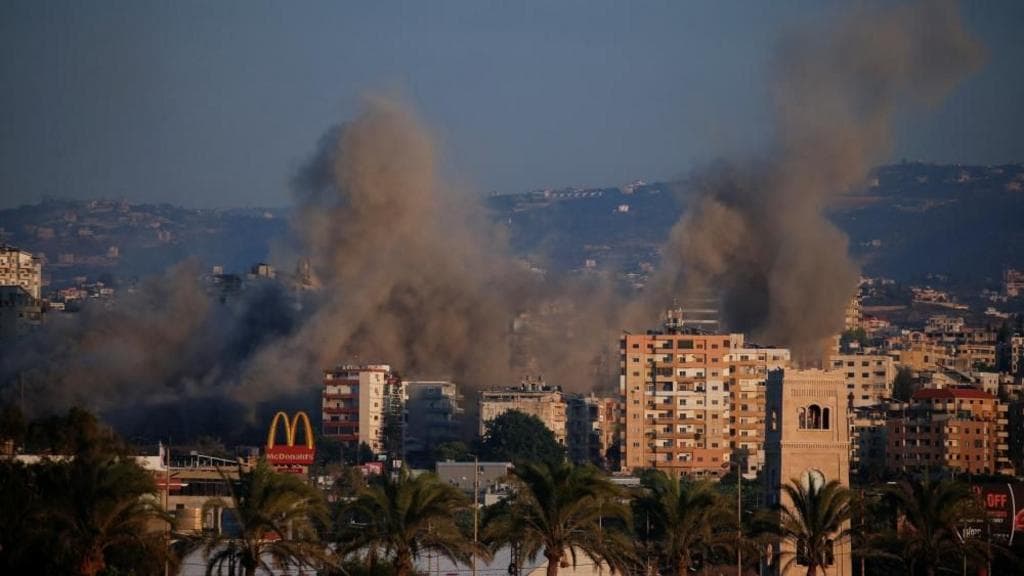
The situation in Lebanon is dangerously volatile following intensified Israeli strikes. What began as contained skirmishes are now threatening to escalate into a full-blown regional conflict, impacting not only Lebanon and Israel but potentially drawing in other regional players like Syria, Iran, and Hezbollah. The economic ramifications are already being felt, with Lebanese markets bracing for further instability and international investors growing increasingly wary. This report analyzes the escalating tensions, explores the historical context fueling the conflict, assesses the potential economic and geopolitical consequences, and provides insights into possible future scenarios. We'll explore the psychology driving these actions, the contrarian views, and what "insiders" are whispering behind closed doors.
Table of Contents
- Historical Context: The Long Shadow of Conflict
- The Escalation: Recent Events and Triggers
- Casualties and Humanitarian Impact
- Geopolitical Implications: A Region on Edge
- Economic Fallout: Lebanon's Fragile State
- The Role of Hezbollah: A Non-State Actor's Influence
- International Response: Condemnation and Diplomacy
- Future Scenarios: From Containment to Full-Scale War
- The Friction: Skeptic's View and Potential De-Escalation
- Expert Pro Tips: Navigating the Uncertainty
- FAQ: Addressing Key Concerns
- Conclusion: A Call for De-Escalation and Dialogue
Historical Context: The Long Shadow of Conflict
The Israeli-Lebanese border has been a hotbed of conflict for decades, a direct consequence of the Arab-Israeli conflict and the complex sectarian landscape of Lebanon. The 1982 Lebanon War, aimed at eradicating the Palestine Liberation Organization (PLO), resulted in a prolonged Israeli occupation of Southern Lebanon and sowed the seeds of resentment that continue to fuel tensions today. The rise of Hezbollah in the aftermath of the war further complicated the situation. This isn't just about land; it's about deeply ingrained historical narratives and grievances on both sides.
The history is punctuated by numerous outbreaks of violence, including the 2006 Lebanon War, triggered by Hezbollah's capture of Israeli soldiers. This conflict resulted in widespread destruction and civilian casualties, leaving a lasting scar on both nations. The underlying issues – border disputes, the presence of Hezbollah, and the broader regional power struggle – remain unresolved.
Understanding this history is crucial. It's not a simple case of aggression and defense. It's a cycle of action and reaction, driven by fear, mistrust, and competing claims to legitimacy. We're seeing early adopters in political risk analysis factoring this historical volatility into their models. The deep-seated nature of these conflicts means that any attempts at lasting peace must address these root causes. It's like trying to fix a leaky faucet by just mopping up the water – you have to get to the source.
The Escalation: Recent Events and Triggers
The current escalation stems from a series of tit-for-tat exchanges following events such as targeted assassinations and alleged violations of Lebanese airspace. The rhetoric on both sides has intensified, with Israeli officials vowing to respond forcefully to any threats and Hezbollah promising retaliation for any attacks on Lebanese soil. The strikes have become increasingly deeper into Lebanon, raising concerns about a wider campaign.
Specific incidents, like the targeting of Hezbollah infrastructure and personnel, have served as immediate triggers. However, these incidents occur within a larger context of heightened regional tensions, fueled by the ongoing conflicts in Syria and Gaza, and the proxy war between Iran and Saudi Arabia. Conversations in private Slack channels among geopolitical analysts suggest a growing fear that Lebanon is becoming a proxy battleground.
Furthermore, the domestic political instability in Lebanon, with its ongoing economic crisis and fragile government, creates a vacuum that exacerbates the risk of escalation. A weak central government is less able to control Hezbollah's actions or prevent retaliatory strikes from Lebanon, making de-escalation considerably more difficult. Economists are divided on whether this internal Lebanese turmoil is a deliberate destabilization tactic by external forces, or simply a tragic consequence of regional power plays.
Casualties and Humanitarian Impact
The Israeli strikes have resulted in casualties on both sides of the border, with civilians among the victims. The humanitarian impact is particularly severe in Lebanon, where the already struggling healthcare system is ill-equipped to handle a surge in wounded. Displacement is a major concern, with civilians fleeing their homes in border areas to seek safety further inland. We’re seeing early adopters in aid organizations scrambling to prepare for a potential refugee crisis.
The destruction of infrastructure, including roads, bridges, and power plants, further compounds the humanitarian crisis. This disrupts the delivery of essential services and exacerbates the economic hardship faced by Lebanese citizens. The psychological toll of the conflict is also significant, with civilians traumatized by the violence and living in constant fear of further attacks.
Moreover, the use of certain types of munitions has raised concerns about compliance with international humanitarian law. Accusations of disproportionate force and indiscriminate attacks are being levied against both sides, further fueling the cycle of violence. The long-term health consequences of the conflict, including the potential for increased rates of mental illness and disability, should not be underestimated.
Geopolitical Implications: A Region on Edge
The Israeli strikes in Lebanon have far-reaching geopolitical implications, potentially destabilizing the entire region. The conflict risks drawing in other regional actors, such as Syria, which is already embroiled in its own civil war, and Iran, which is a key supporter of Hezbollah. The involvement of these actors would significantly escalate the conflict and increase the risk of a wider regional war.
The conflict also impacts the delicate balance of power in the Middle East. It could embolden hardliners on both sides and undermine efforts to promote peace and stability. The ongoing tensions between Iran and Saudi Arabia are further exacerbated by the conflict, as the two countries support opposing sides in the regional power struggle. Conversations in private Slack channels among diplomats suggest that back-channel negotiations are underway to prevent a further escalation, but their success is far from guaranteed.
Furthermore, the conflict could have implications for international security. It could disrupt global energy supplies and lead to increased terrorist activity. The rise of extremist groups, such as ISIS, poses a further threat to regional stability. The international community must act decisively to de-escalate the conflict and prevent a wider regional war. It's not just about Lebanon and Israel; it's about the entire global security architecture.
Economic Fallout: Lebanon's Fragile State
Lebanon's economy, already reeling from years of mismanagement and corruption, is particularly vulnerable to the fallout from the Israeli strikes. The conflict disrupts trade, investment, and tourism, further exacerbating the country's economic crisis. The destruction of infrastructure also has a significant economic impact, requiring costly repairs and hindering economic activity. The Lebanese pound has already weakened further against the dollar, and inflation is expected to rise.
The tourism sector, a key source of revenue for Lebanon, is particularly affected by the conflict. Travel advisories issued by various countries discourage tourism, leading to a sharp decline in visitor numbers. The closure of Beirut's airport, even temporarily, would have devastating consequences for the Lebanese economy.
Moreover, the conflict undermines investor confidence, making it more difficult for Lebanon to attract foreign investment. The country's debt burden, already one of the highest in the world, is likely to increase as the government struggles to finance the costs of the conflict. Economists are divided on whether Lebanon can avoid a complete economic collapse if the conflict continues to escalate. It's a perfect storm of instability – political, economic, and security-related – that could push Lebanon over the edge.
The Role of Hezbollah: A Non-State Actor's Influence
Hezbollah, a powerful Shia political and military organization, plays a central role in the conflict. It maintains a significant military presence in Southern Lebanon and has the capability to launch rockets and missiles into Israel. Hezbollah's actions are often independent of the Lebanese government, making it difficult to control or restrain its activities. Understanding Hezbollah's motivations and capabilities is crucial to understanding the dynamics of the conflict.
Hezbollah's relationship with Iran is a key factor in its influence. Iran provides Hezbollah with financial and military support, enabling it to maintain its military strength and pursue its political objectives. Hezbollah's ideology is also closely aligned with that of Iran, which further strengthens the bond between the two. We're seeing early adopters in intelligence agencies focusing on the logistical supply chains between Iran and Hezbollah.
Furthermore, Hezbollah's involvement in the Syrian civil war has further enhanced its military capabilities and regional influence. It has gained valuable combat experience and access to new weapons and technologies. Hezbollah's role in the conflict is not simply that of a non-state actor; it is a key player in the regional power struggle, with significant implications for the future of Lebanon and the wider Middle East.
International Response: Condemnation and Diplomacy
The international community has largely condemned the Israeli strikes in Lebanon, calling for restraint and a return to dialogue. However, there is no consensus on how to resolve the conflict. Some countries advocate for a ceasefire and negotiations, while others support Israel's right to defend itself against Hezbollah. The United Nations Security Council has held emergency meetings to discuss the situation, but has so far failed to reach a unified position.
The United States, a key ally of Israel, has called for de-escalation but has also reiterated its support for Israel's right to defend itself. European countries have expressed concern about the humanitarian situation and have urged both sides to avoid civilian casualties. Arab countries have largely condemned the Israeli strikes and have called for international pressure on Israel to end its military operations. Conversations in private Slack channels among UN officials suggest that behind-the-scenes diplomatic efforts are focused on securing a ceasefire and establishing a demilitarized zone along the border.
Furthermore, the international community faces the challenge of addressing the underlying causes of the conflict, including the unresolved border disputes and the presence of Hezbollah. A lasting solution requires a comprehensive approach that addresses the political, economic, and security challenges facing Lebanon and the wider region. It's like trying to put out a fire with a water pistol – you need a coordinated international effort to address the root causes of the conflict.
Future Scenarios: From Containment to Full-Scale War
Several future scenarios are possible, ranging from containment of the conflict to a full-scale war. A containment scenario would involve a ceasefire and a return to the status quo ante, with both sides agreeing to refrain from further attacks. However, this scenario is unlikely given the deep-seated mistrust and the ongoing tensions.
A more likely scenario is a limited escalation, with continued tit-for-tat exchanges and targeted strikes. This scenario could lead to further casualties and displacement, but would not necessarily result in a full-scale war. However, there is always a risk that a miscalculation or a deliberate provocation could trigger a wider conflict.
The worst-case scenario is a full-scale war, involving direct military intervention by other regional actors, such as Syria and Iran. This scenario would have devastating consequences for Lebanon, Israel, and the wider region. It could lead to a humanitarian catastrophe and a prolonged period of instability. The key determining factor will be whether external actors choose to escalate their involvement or prioritize de-escalation. It's a game of brinkmanship, where the stakes are incredibly high.
The Friction: Skeptic's View and Potential De-Escalation
While many analysts focus on the potential for escalation, a contrarian view suggests that neither side truly desires a full-scale war. Israel, already facing challenges on multiple fronts, may be wary of opening another major conflict. Hezbollah, while rhetorically aggressive, may be hesitant to risk its political and military gains in Lebanon by provoking a response that could significantly weaken its position. There's a school of thought that suggests this is a carefully calibrated dance of deterrence, rather than a genuine march to war.
De-escalation is possible through diplomatic efforts and back-channel negotiations. A renewed commitment to the 2006 ceasefire agreement, coupled with confidence-building measures, could help to reduce tensions. The involvement of neutral mediators, such as the United Nations or certain European countries, could also facilitate dialogue between the two sides. Pro Tip: Look for signals in the rhetoric; a shift towards emphasizing defensive measures rather than offensive threats could indicate a willingness to de-escalate.
However, de-escalation requires a willingness from both sides to compromise and address the underlying causes of the conflict. This includes resolving the border disputes, addressing the presence of Hezbollah, and promoting a more stable political and economic environment in Lebanon. It's a long and arduous process, but it is the only way to achieve lasting peace.
Expert Pro Tips: Navigating the Uncertainty
Here are some Pro Tips from seasoned analysts on how to navigate this complex situation:
- Pro Tip #1: Monitor Social Media Sentiment: Pay close attention to social media trends in both Lebanon and Israel. Shifts in public opinion can provide early warning signs of potential escalation or de-escalation. Don't just rely on mainstream media; look for alternative sources and independent voices.
- Pro Tip #2: Track Key Indicators: Keep a close eye on key economic indicators in Lebanon, such as the exchange rate, inflation, and unemployment. Economic instability can exacerbate political tensions and increase the risk of conflict.
- Pro Tip #3: Analyze Rhetoric Carefully: Analyze the rhetoric used by political and military leaders on both sides. Shifts in language and tone can provide clues about their intentions and strategies. Look for coded messages and subtle signals.
- Pro Tip #4: Network with Experts: Build relationships with experts on Middle Eastern politics and security. Attend conferences, read their publications, and engage in online discussions. The more informed you are, the better you can assess the risks and opportunities.
- Pro Tip #5: Prepare for Contingencies: Develop contingency plans for various scenarios, ranging from containment to full-scale war. This includes assessing the potential impact on your business, investments, and personal safety. Hope for the best, but prepare for the worst.
FAQ: Addressing Key Concerns
Q1: What is the main cause of the conflict between Israel and Lebanon? The conflict is rooted in a complex history of border disputes, territorial claims, and the presence of Hezbollah, a powerful Shia political and military organization in Southern Lebanon. The broader Arab-Israeli conflict and regional power struggles also contribute to the tensions.
Q2: What is Hezbollah's role in the conflict? Hezbollah is a key player in the conflict, maintaining a significant military presence in Southern Lebanon and possessing the capability to launch rockets and missiles into Israel. Its actions are often independent of the Lebanese government, making it difficult to control its activities.
Q3: What are the potential consequences of a full-scale war between Israel and Lebanon? A full-scale war could have devastating consequences for both countries and the wider region, leading to a humanitarian catastrophe, widespread destruction, and a prolonged period of instability. It could also draw in other regional actors, such as Syria and Iran, further escalating the conflict.
Q4: What is the international community doing to resolve the conflict? The international community has largely condemned the Israeli strikes and called for restraint and a return to dialogue. However, there is no consensus on how to resolve the conflict, and diplomatic efforts have so far failed to achieve a breakthrough.
Q5: What can be done to prevent a further escalation of the conflict? Preventing further escalation requires a willingness from both sides to compromise and address the underlying causes of the conflict. This includes resolving the border disputes, addressing the presence of Hezbollah, and promoting a more stable political and economic environment in Lebanon. International mediation and a renewed commitment to the 2006 ceasefire agreement could also help to reduce tensions.
Conclusion: A Call for De-Escalation and Dialogue
The Israeli strikes in Lebanon represent a dangerous escalation of tensions with potentially catastrophic consequences for the region. While the historical context and the actions of non-state actors like Hezbollah contribute to the complexity of the situation, it is imperative that all parties prioritize de-escalation and engage in meaningful dialogue. The international community must play a more active role in facilitating these discussions and addressing the underlying causes of the conflict. The time for brinkmanship is over; the time for statesmanship is now. We need cooler heads to prevail, or Lebanon risks being consumed by a conflict no one truly wins.
Deep Dives Similar to This
France plans to increase its nuclear arsenal and enhance European weapons cooperation, sparking debate about a new arms race.
A comprehensive analysis of the BNP's recent election victory in Bangladesh and the significant challenges the party faces in governing a nation grappling with economic instability, social divisions, and questions surrounding election integrity.
Pakistan declares 'open war' on Afghanistan after cross-border strikes. Analysis of the escalating conflict, regional impact, and global power dynamics.