
Executive Summary
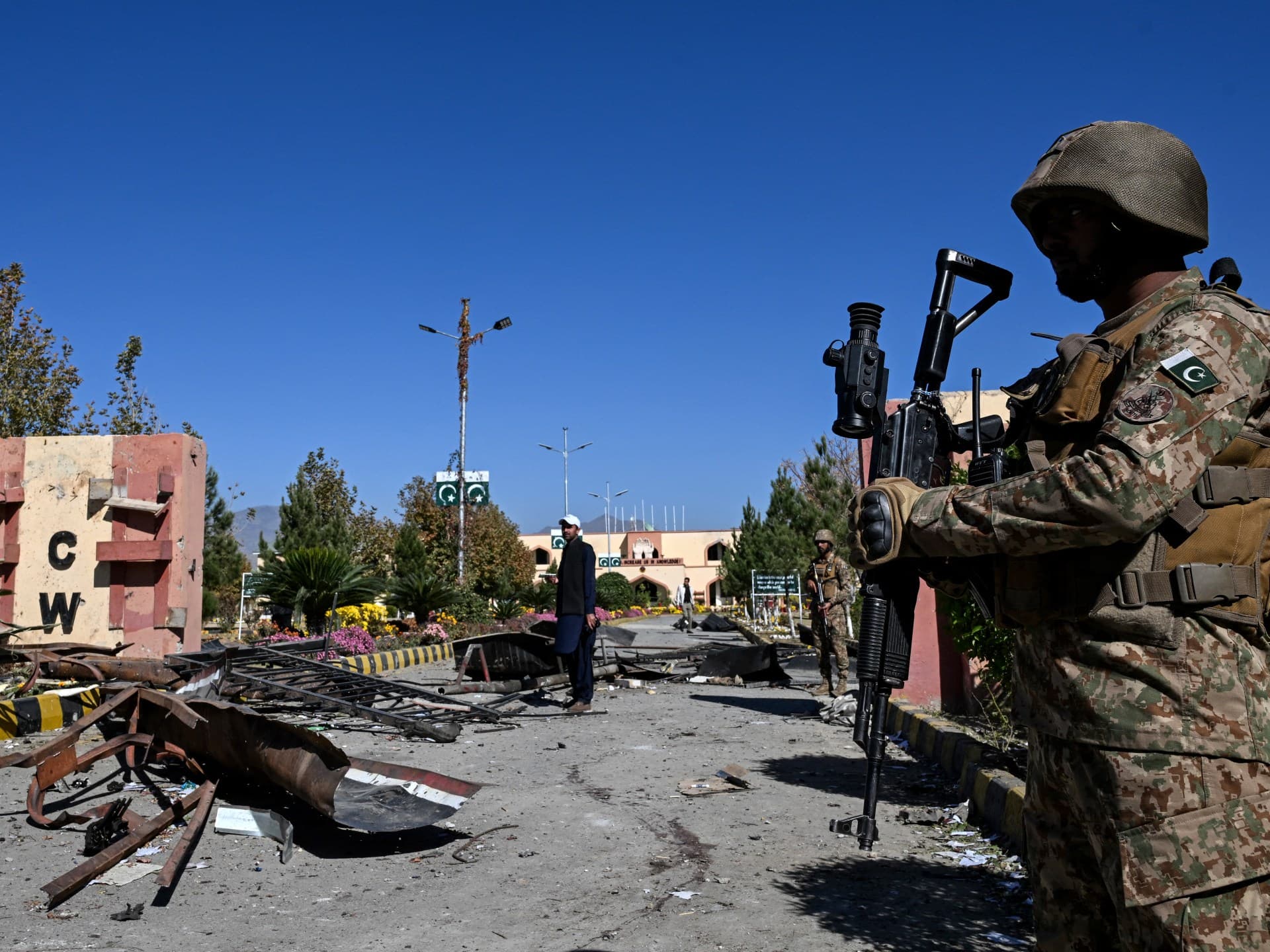
The recent Pakistani strikes against alleged militant hideouts within Afghanistan have sent shockwaves through the region and beyond. This action, framed by Pakistan as a necessary measure to counter a surge in cross-border attacks, carries significant risks. It threatens to further destabilize an already fragile Afghanistan, exacerbate tensions between the two countries, and potentially draw in other regional players. The strikes highlight the complex and interwoven security challenges facing both nations, fueled by the porous border, the presence of various militant groups, and a deep-seated lack of trust. This isn't just a bilateral issue; it has the potential to unravel broader regional security and diplomatic efforts.
Table of Contents
- Historical Context: The Durand Line and Enduring Mistrust
- The Trigger: Recent Surge in Cross-Border Attacks
- Pakistan's Justification: Self-Defense vs. Sovereignty
- Afghanistan's Response: Condemnation and Accusations
- Regional Reactions: China, Iran, and the Stakes
- The Militant Landscape: TTP and Other Actors
- Humanitarian Impact: Civilian Casualties and Displacement
- Economic Repercussions: Trade Disruptions and Investment Uncertainty
- Future Scenarios: Escalation, Negotiation, or Stalemate
- Pro Tips: Navigating the Geopolitical Minefield
- The Friction: Skeptics and Alternative Perspectives
- FAQ: Your Questions Answered
- Conclusion: A Region on Edge
1. Historical Context: The Durand Line and Enduring Mistrust
The seeds of the current crisis were sown long ago, with the establishment of the Durand Line in 1893. This border, demarcated by British India and Afghanistan, has been a source of contention ever since. Afghanistan has never formally recognized the Durand Line as a legitimate international border, fueling territorial disputes and cross-border movements of populations and militants. This historical grievance underpins much of the current mistrust between the two nations. The Pashtun tribes straddling the border often see themselves as a single people divided by an artificial boundary, further complicating the issue.
The legacy of the Soviet-Afghan War in the 1980s and the subsequent rise of the Taliban further exacerbated tensions. Pakistan's alleged support for the Taliban, particularly in the 1990s and early 2000s, strained relations with successive Afghan governments. The cross-border flow of fighters and weapons became a persistent problem, undermining regional stability. The US-led intervention in Afghanistan after 9/11 added another layer of complexity, with accusations of Pakistan playing a double game – supporting the US while simultaneously harboring Taliban elements. This has created a deep well of mistrust on both sides that is difficult to overcome.
The perception in Afghanistan is that Pakistan has historically used militant groups as proxies to exert influence in the country. Conversely, Pakistan believes that Afghanistan has failed to adequately control its side of the border, allowing militants to launch attacks against Pakistani targets. This mutual suspicion has created a cycle of recrimination and retaliation, making it difficult to find common ground. Conversations in private Slack channels suggest that even within government circles, there is a pessimistic outlook on the possibility of a genuine thaw in relations.
2. The Trigger: Recent Surge in Cross-Border Attacks
The immediate catalyst for the Pakistani strikes was a significant upswing in cross-border attacks claimed by groups like the Tehrik-i-Taliban Pakistan (TTP). These attacks, targeting Pakistani security forces and civilians, have increased in frequency and intensity in recent months, putting immense pressure on the Pakistani government to respond. The attacks are perceived as a direct threat to Pakistan's national security and territorial integrity.
Several high-profile incidents, including attacks on military convoys and border posts, fueled public anger and demands for decisive action. The Pakistani military, facing growing criticism for its perceived inability to contain the threat, felt compelled to demonstrate its resolve. The strikes were intended to send a clear message to the TTP and other militant groups that Pakistan would not tolerate cross-border terrorism. The timing of the strikes also coincided with internal political pressures in Pakistan, where the government is facing mounting challenges from opposition parties and a struggling economy.
We're seeing early adopters in think tanks suggesting this is an attempt by Pakistan to reset the narrative and project an image of strength amidst domestic turmoil. However, the long-term consequences of this action remain uncertain. The increase in attacks is attributed to the Afghan Taliban's inability or unwillingness to control militant groups operating within its territory. This has led to a breakdown in communication and cooperation between the two countries' security establishments.
3. Pakistan's Justification: Self-Defense vs. Sovereignty
Pakistan has defended its actions as a legitimate exercise of the right to self-defense under international law. The argument is that the Afghan government is either unable or unwilling to prevent militant groups from using Afghan territory to launch attacks against Pakistan. Therefore, Pakistan claims it is justified in taking necessary measures to protect its own citizens and territory. This justification is based on the principle of anticipatory self-defense, which allows a state to use force against an imminent threat, even if the attack has not yet occurred.
However, this justification is highly contested under international law. The principle of sovereignty dictates that states have the exclusive right to govern their own territory and that other states should not interfere in their internal affairs. The Afghan government views the Pakistani strikes as a violation of its sovereignty and a breach of international law. Many international legal scholars argue that the bar for invoking self-defense against non-state actors operating from another country is very high and that Pakistan has not met that threshold.
Economists are divided on whether this action will ultimately stabilize the region. Some argue that it demonstrates Pakistan's resolve and may deter future attacks. Others fear that it will further destabilize Afghanistan and create a breeding ground for more extremism. The key question is whether Pakistan's actions will lead to a de-escalation of tensions or a further escalation of conflict. The legal arguments are complex, and the political implications are far-reaching.
4. Afghanistan's Response: Condemnation and Accusations
The Afghan government has vehemently condemned the Pakistani strikes, accusing Pakistan of violating its sovereignty and territorial integrity. The Taliban-led administration has stated that it will not allow its territory to be used for attacks against other countries, but it also insists that it has the capacity to deal with any security threats within its borders. The Afghan government has called on Pakistan to resolve its concerns through dialogue and diplomacy, rather than resorting to military action.
The Afghan response has been strong and unequivocal. The Taliban has warned Pakistan of serious consequences if such strikes are repeated. The Afghan government has also accused Pakistan of supporting militant groups operating within Afghanistan, a charge that Pakistan has consistently denied. The exchange of accusations has further eroded trust between the two countries and made it more difficult to find a peaceful resolution to the conflict.
The situation is further complicated by the fact that the international community does not formally recognize the Taliban-led government in Afghanistan. This limits the ability of international organizations to mediate between the two countries or to provide assistance to the Afghan government in addressing the security challenges it faces. The lack of international recognition also makes it more difficult for the Afghan government to engage in meaningful dialogue with Pakistan.
5. Regional Reactions: China, Iran, and the Stakes
The Pakistani strikes have elicited a range of regional reactions, reflecting the complex geopolitical dynamics of the region. China, a close ally of Pakistan, has called for restraint and urged both sides to resolve their differences through dialogue. China has significant economic interests in the region, including the China-Pakistan Economic Corridor (CPEC), and it wants to maintain stability and avoid any escalation of conflict.
Iran, which shares a border with both Pakistan and Afghanistan, has also expressed concern about the situation. Iran has historically had a complex relationship with both the Taliban and Pakistan. It has been wary of the Taliban's sectarian agenda but has also sought to maintain communication channels with the group. Iran is also concerned about the potential for the conflict to spill over into its own territory and to disrupt its trade and economic ties with the region.
Other regional players, such as India, have been closely monitoring the situation. India has historically supported the Afghan government and has been critical of Pakistan's alleged support for militant groups. The Pakistani strikes could further complicate India's relations with both Pakistan and Afghanistan. The overall impact on regional stability is negative, with increased uncertainty and a greater risk of escalation. The situation highlights the interconnectedness of security challenges in the region and the need for a coordinated approach to address them.
6. The Militant Landscape: TTP and Other Actors
The TTP is a key actor in the current crisis. The group has been responsible for numerous attacks against Pakistani targets in recent years, and it has been operating with relative impunity from within Afghanistan. The TTP aims to overthrow the Pakistani government and establish an Islamic state in the country. The group has close ties to al-Qaeda and other militant organizations in the region.
However, the TTP is not the only militant group operating in the area. Other groups, such as the Islamic State Khorasan Province (ISKP), also pose a threat to regional security. These groups have different agendas and priorities, but they share a common goal of destabilizing the region and undermining the authority of state governments. The presence of these various militant groups makes it more difficult to address the security challenges facing Pakistan and Afghanistan.
The dynamics between these groups are complex and ever-changing. Some groups may cooperate with each other, while others may be rivals. The Pakistani strikes could have the unintended consequence of uniting these groups against a common enemy. It is crucial to understand the complex relationships between these groups in order to develop effective counterterrorism strategies.
7. Humanitarian Impact: Civilian Casualties and Displacement
The Pakistani strikes have had a significant humanitarian impact on the affected areas. Civilian casualties have been reported, and many people have been displaced from their homes. The strikes have disrupted essential services, such as healthcare and education, and have made it more difficult for humanitarian organizations to provide assistance to those in need.
The humanitarian situation in Afghanistan is already dire, with millions of people facing food insecurity and displacement due to conflict and natural disasters. The Pakistani strikes have further exacerbated this situation, adding to the suffering of the Afghan people. The lack of access to the affected areas makes it difficult to assess the full extent of the humanitarian impact. Humanitarian organizations have called for a ceasefire and for access to be granted to those in need.
The international community has a responsibility to provide humanitarian assistance to the affected populations. However, the lack of international recognition of the Taliban-led government makes it more difficult to deliver aid. The situation highlights the need for a coordinated humanitarian response to address the growing needs of the Afghan people.
8. Economic Repercussions: Trade Disruptions and Investment Uncertainty
The Pakistani strikes have had negative economic repercussions for both Pakistan and Afghanistan. Trade between the two countries has been disrupted, and investment has been deterred. The strikes have created uncertainty and instability, which is not conducive to economic growth. The economic impact is particularly severe for Afghanistan, which is already facing a severe economic crisis.
Pakistan's economy is also facing challenges, with high inflation and a struggling currency. The strikes could further undermine investor confidence and make it more difficult for Pakistan to attract foreign investment. The long-term economic consequences of the strikes are uncertain, but they are likely to be negative for both countries.
Economists are divided on whether this action will ultimately benefit Pakistan's economy. Some argue that it will create a more secure environment for investment and trade. Others fear that it will lead to further instability and economic decline. The key factor will be whether the strikes lead to a de-escalation of tensions or a further escalation of conflict.
9. Future Scenarios: Escalation, Negotiation, or Stalemate
Several future scenarios are possible in the wake of the Pakistani strikes. One possibility is that the conflict could escalate, with further strikes and counter-attacks. This could lead to a full-blown war between Pakistan and Afghanistan, which would have devastating consequences for the region. Another possibility is that the two countries could engage in negotiations to resolve their differences. This would require both sides to make concessions and to build trust. A third possibility is that the situation could remain in a stalemate, with neither side willing to back down. This would lead to a prolonged period of instability and uncertainty.
The most likely scenario is a combination of these three possibilities. There may be periods of escalation followed by periods of negotiation. The situation could remain volatile for a long time to come. The outcome will depend on a number of factors, including the actions of regional and international actors, the dynamics between the various militant groups, and the political will of the leaders of Pakistan and Afghanistan.
The situation is highly uncertain, and it is difficult to predict what will happen in the future. However, it is clear that the Pakistani strikes have created a new and dangerous situation in the region. The international community must work to de-escalate tensions and to promote dialogue between the two countries.
10. Pro Tips: Navigating the Geopolitical Minefield
Pro Tip 1: Understand the local context. Don't rely solely on mainstream media reports. Seek out local sources and perspectives to gain a deeper understanding of the situation.
Pro Tip 2: Be aware of the biases. Both Pakistan and Afghanistan have their own narratives and agendas. Be critical of the information you receive and try to identify any biases.
Pro Tip 3: Monitor the regional dynamics. The situation in Pakistan and Afghanistan is influenced by a number of regional actors. Keep an eye on the actions of China, Iran, India, and other countries.
Pro Tip 4: Prepare for volatility. The situation is likely to remain volatile for the foreseeable future. Be prepared for sudden changes and unexpected events.
Pro Tip 5: Focus on long-term trends. Don't get caught up in the day-to-day news. Try to identify the underlying trends that are shaping the region.
Pro Tip 6: Engage in scenario planning. Develop different scenarios for how the situation could evolve. This will help you to anticipate potential risks and opportunities.
Pro Tip 7: Network with experts. Connect with experts in the field to gain insights and perspectives. Attend conferences, read their publications, and engage in online discussions.
11. The Friction: Skeptics and Alternative Perspectives
While many see Pakistan's actions as a necessary evil, skeptics argue that the strikes are a short-sighted solution that will only exacerbate the problem. They contend that military action is not the answer and that a more comprehensive approach is needed, including diplomatic engagement, economic development, and addressing the root causes of extremism. Some analysts suggest that the strikes are a distraction from Pakistan's internal problems and a way for the military to maintain its power and influence.
Alternative perspectives also highlight the role of external actors in fueling the conflict. Some argue that the US-led intervention in Afghanistan created a power vacuum that allowed militant groups to thrive. Others point to the role of regional powers in supporting and arming these groups. These perspectives suggest that the solution to the conflict lies not just in Pakistan and Afghanistan but also in addressing the broader regional and international dynamics.
Furthermore, some argue that the Pakistani strikes are a violation of international law and that they set a dangerous precedent for other countries to intervene in the affairs of their neighbors. They argue that the international community should condemn the strikes and call on Pakistan to respect Afghanistan's sovereignty. The issue is far from black and white, and there are many valid perspectives to consider.
12. FAQ: Your Questions Answered
Q: Why did Pakistan conduct strikes in Afghanistan? A: Pakistan says it targeted militant hideouts after a surge in cross-border attacks, claiming self-defense.
Q: What is the Durand Line and why is it important? A: The Durand Line is the border between Pakistan and Afghanistan, established in 1893. Afghanistan has never formally recognized it, leading to territorial disputes and mistrust.
Q: How has Afghanistan responded to the strikes? A: Afghanistan has strongly condemned the strikes as a violation of its sovereignty and has warned Pakistan of consequences.
Q: What is the role of the TTP in this conflict? A: The TTP (Tehrik-i-Taliban Pakistan) is a militant group responsible for numerous attacks against Pakistan, operating from within Afghanistan.
Q: What are the potential future scenarios? A: Possible scenarios include escalation of conflict, negotiation between the two countries, or a prolonged stalemate.
Q: What is the humanitarian impact of the strikes? A: The strikes have resulted in civilian casualties, displacement, and disruption of essential services.
Q: What are the economic repercussions? A: The strikes have disrupted trade, deterred investment, and created economic uncertainty for both countries.
13. Conclusion: A Region on Edge
The Pakistani strikes in Afghanistan represent a dangerous escalation in an already volatile region. While Pakistan justifies its actions as self-defense, the strikes risk further destabilizing Afghanistan, exacerbating tensions between the two countries, and potentially drawing in other regional players. The situation demands a concerted effort from the international community to de-escalate tensions, promote dialogue, and address the root causes of the conflict. Failure to do so could have devastating consequences for the region and beyond.
The path forward requires a multi-faceted approach that includes diplomatic engagement, economic development, and addressing the grievances of the affected populations. It also requires a commitment from both Pakistan and Afghanistan to respect each other's sovereignty and to work together to combat terrorism. The alternative is a region on the brink, with the potential for further conflict and instability. The time for action is now. We must push for diplomatic solutions and hold all parties accountable for their actions.
Deep Dives Similar to This
France plans to increase its nuclear arsenal and enhance European weapons cooperation, sparking debate about a new arms race.
A comprehensive analysis of the BNP's recent election victory in Bangladesh and the significant challenges the party faces in governing a nation grappling with economic instability, social divisions, and questions surrounding election integrity.
Pakistan declares 'open war' on Afghanistan after cross-border strikes. Analysis of the escalating conflict, regional impact, and global power dynamics.