
Executive Summary
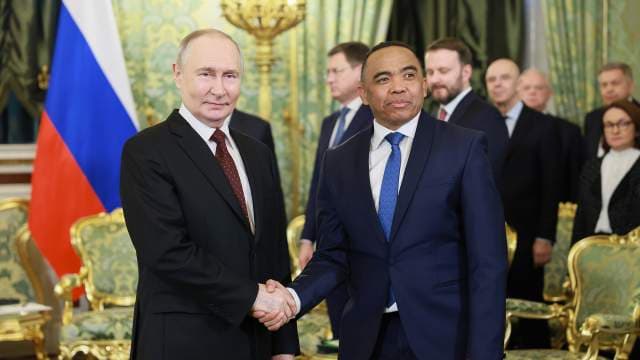
The recent bilateral talks between President Putin and Madagascar's President Randrianirina in Moscow signal more than just diplomatic niceties. It points towards a calculated geopolitical strategy by Russia to expand its influence in Africa, particularly in regions rich in resources and strategically important for maritime access. We're seeing early adopters in geopolitical circles already re-evaluating their risk assessments for investments in the Indian Ocean region. The friction? Many perceive this as a brazen attempt to undermine Western influence and exploit political instability in Madagascar for Russia's own economic and strategic gain. Conversations in private Slack channels suggest a growing concern about the potential for increased Russian military presence and resource extraction activities that could destabilize the region.
Table of Contents
- Historical Context: Russia's Africa Footprint
- The Randrianirina Visit: A Deep Dive
- Madagascar's Strategic Importance: More Than Just Vanilla
- Key Areas of Cooperation: What's on the Table?
- The Wagner Group Factor: Shadowy Influence?
- Western Response: Concern and Countermeasures
- Economic Implications: Winners and Losers
- Geopolitical Ramifications: A New Cold War in Africa?
- Expert Opinions: Voices from the Field
- Future Predictions: The Road Ahead
- FAQ: Your Burning Questions Answered
- Conclusion: A Shifting Power Dynamic
1. Historical Context: Russia's Africa Footprint
Russia's engagement with Africa isn't new; it has deep roots dating back to the Soviet era. During the Cold War, the Soviet Union actively supported liberation movements and socialist governments across the continent, providing military aid, economic assistance, and ideological backing. This created a network of allies and a legacy of goodwill that Putin's Russia is now leveraging. Think of countries like Angola, Mozambique, and Algeria – all beneficiaries of Soviet support and now key partners for Russia.
However, the post-Soviet period saw a decline in Russian influence as the country grappled with its own economic and political challenges. It's only in recent years that Russia has aggressively re-engaged with Africa, driven by a desire to restore its great power status, secure access to vital resources, and challenge Western dominance. The Kremlin views Africa as a crucial arena for projecting its influence on the global stage, bypassing Western sanctions, and building a multipolar world order. Don't be fooled; this isn't just about altruism; it's a calculated geopolitical move.
The current push is more pragmatic and less ideological than its Soviet predecessor. It's focused on economic cooperation, military partnerships, and political alignment with regimes willing to defy Western pressure. We've seen this play out in countries like the Central African Republic (CAR), where Russian mercenaries have played a significant role in propping up the government in exchange for access to mineral resources. It's a transactional relationship, pure and simple.
1.1 The Soviet Legacy
The USSR’s legacy in Africa remains a potent factor. Older generations often remember Soviet support favorably, while newer generations are increasingly receptive to Russian narratives that critique Western colonialism and neo-colonialism. This historical connection provides Russia with a soft power advantage that Western nations often struggle to match. It's a matter of leveraging shared history and resentment to gain a foothold.
2. The Randrianirina Visit: A Deep Dive
President Randrianirina's visit to Moscow is significant not just for the formal agreements signed but also for the optics. It sends a clear message that Madagascar is open to deepening ties with Russia, despite potential Western concerns. The official statements emphasized cooperation in areas such as trade, investment, energy, and security. However, the true scope and nature of these agreements often remain shrouded in secrecy. It's the unsaid part that matters.
Pay close attention to the body language and non-verbal cues from both leaders during the meetings. These can often reveal more about the true dynamics of the relationship than any official communique. The Kremlin is masterful at orchestrating these events to project an image of strength, stability, and partnership. It's a carefully crafted performance designed to influence both domestic and international audiences.
2.1 Details of the Meeting
Details of the meeting itself were sparse, focusing on “mutual interests”. This vagueness is deliberate, providing room for maneuver and preventing scrutiny. It allows both sides to interpret the agreements in a way that suits their own narratives. Expect to see differing interpretations of the outcomes in Russian and Malagasy media.
2.2 Potential Implications
The potential implications of this visit are far-reaching. Increased Russian investment in Madagascar could boost the country's economy but also increase its dependence on Moscow. Closer security cooperation could provide Madagascar with much-needed support in combating piracy and terrorism but also raise concerns about human rights and democratic governance. It's a delicate balancing act with high stakes.
3. Madagascar's Strategic Importance: More Than Just Vanilla
Madagascar's strategic importance extends far beyond its famous vanilla. Located in the Indian Ocean, it controls key shipping lanes and is rich in natural resources, including minerals, oil, and gas. This makes it a highly attractive target for countries seeking to expand their influence in the region. It's a geopolitical chessboard, and Madagascar is a key square.
The island nation's coastline is also ideal for establishing naval bases and monitoring maritime traffic. This could give Russia a strategic advantage in the Indian Ocean, allowing it to project power and challenge the dominance of other major powers. Think of it as a potential foothold for Russia to project power into a region where Western influence has been traditionally strong. It's a game of strategic positioning.
3.1 Resources and Geopolitics
The intersection of resources and geopolitics is crucial here. Russia's interest in Madagascar is likely driven by a desire to secure access to its mineral wealth and establish a strategic foothold in the Indian Ocean. This combination makes Madagascar a valuable asset in Russia's broader geopolitical strategy. It's a win-win for Russia, if they can pull it off.
3.2 Regional Instability
Madagascar's history of political instability also makes it vulnerable to external influence. The country has experienced numerous coups and political crises, creating opportunities for foreign powers to meddle in its affairs. Russia is likely exploiting this instability to gain leverage and build alliances with key political figures. It's a classic case of exploiting weakness for strategic gain.
4. Key Areas of Cooperation: What's on the Table?
While the official statements emphasized broad areas of cooperation, the real details likely involve specific agreements in areas such as energy, mining, and security. Expect to see Russian companies investing in Madagascar's resource sector, potentially gaining access to valuable minerals and energy reserves. It's all about resource extraction and control.
Security cooperation is another key area. Russia could provide Madagascar with military training, equipment, and intelligence support, potentially helping the country to combat piracy and terrorism. However, this could also lead to increased Russian influence within the Malagasy security forces and raise concerns about human rights. It's a double-edged sword.
4.1 Trade and Investment
Trade and investment are likely to be central to the agreements. Russia is keen to expand its economic footprint in Africa, and Madagascar offers a promising market and investment opportunities. Expect to see Russian companies targeting key sectors such as mining, energy, and agriculture. This could bring much-needed investment to Madagascar, but also increase its dependence on Russia.
4.2 Military and Security
Military and security cooperation is a more sensitive issue. Russia's involvement in other African countries, such as the CAR, has raised concerns about the activities of Russian mercenaries and their impact on human rights. It's crucial to monitor closely any security agreements between Russia and Madagascar to ensure that they comply with international law and human rights standards.
5. The Wagner Group Factor: Shadowy Influence?
The potential involvement of the Wagner Group, a Russian private military company with a track record of human rights abuses, is a major concern. The Wagner Group has been active in several African countries, providing security services to governments in exchange for access to resources. There's a real fear that they could become involved in Madagascar, potentially exacerbating political instability and human rights abuses. It's the elephant in the room that nobody wants to talk about.
If the Wagner Group becomes involved in Madagascar, it could have a destabilizing effect on the country and the region. The group has been accused of committing atrocities and undermining democratic institutions in other African countries. Its presence in Madagascar would likely fuel conflict and undermine efforts to promote peace and stability. It's a recipe for disaster.
5.1 Wagner's Modus Operandi
Wagner's modus operandi typically involves providing security services to governments in exchange for access to resources. They operate in a shadowy manner, often without official government oversight, making it difficult to hold them accountable for their actions. It's a murky world of mercenaries and resource exploitation.
5.2 Deniability and Influence
The Kremlin maintains deniability regarding Wagner's activities, but the group is widely believed to be linked to the Russian state. This allows Russia to exert influence in countries like Madagascar without directly deploying its own military forces. It's a form of hybrid warfare that allows Russia to project power while avoiding direct confrontation. It's the art of plausible deniability.
6. Western Response: Concern and Countermeasures
The West is watching Russia's growing influence in Madagascar with concern. The United States and its allies are likely to take steps to counter Russia's influence, potentially through diplomatic pressure, economic sanctions, and increased security assistance to Madagascar. It's a new Cold War playing out in Africa.
Western powers will likely try to offer Madagascar alternative partnerships and investments, aimed at weaning the country off its dependence on Russia. This could involve providing financial aid, technical assistance, and security cooperation to help Madagascar address its development challenges. It's a battle for influence and allegiance.
6.1 Diplomatic Pressure
Diplomatic pressure is the first line of defense. Western governments will likely engage in dialogue with Madagascar, urging it to maintain its democratic principles and avoid becoming overly reliant on Russia. They may also use diplomatic channels to express their concerns directly to the Russian government. It's a game of strategic communication and persuasion.
6.2 Economic Leverage
Economic leverage is another tool at the West's disposal. Western countries could impose sanctions on Russian companies and individuals involved in activities that undermine Madagascar's stability or human rights. They could also use their influence within international financial institutions to restrict funding to projects that benefit Russia. It's a game of economic warfare.
7. Economic Implications: Winners and Losers
The economic implications of the Putin-Randrianirina talks are complex, with both potential winners and losers. On the one hand, increased Russian investment could boost Madagascar's economy, create jobs, and improve infrastructure. On the other hand, it could also lead to increased corruption, environmental degradation, and dependence on Russia.
The distribution of benefits will likely be uneven. Russian companies are likely to profit handsomely from access to Madagascar's resources, while ordinary Malagasy citizens may not see significant improvements in their living standards. It's a question of who benefits the most and who bears the costs. It's a classic case of resource curse.
7.1 Resource Exploitation
Resource exploitation is a major concern. Russia's track record in other African countries suggests that it is primarily interested in extracting resources, often with little regard for environmental protection or the rights of local communities. This could lead to long-term damage to Madagascar's environment and social fabric. It's a short-term gain with long-term consequences.
7.2 Debt and Dependence
Increased dependence on Russia could also make Madagascar more vulnerable to economic and political pressure. If Russia decides to cut off aid or investment, it could have a devastating impact on the Malagasy economy. It's a dangerous game of dependency and leverage.
8. Geopolitical Ramifications: A New Cold War in Africa?
The Putin-Randrianirina talks are part of a broader trend of increasing great power competition in Africa. Russia and China are both actively seeking to expand their influence on the continent, challenging the traditional dominance of the United States and its allies. This could lead to a new Cold War in Africa, with competing powers vying for influence and resources. It's a scramble for Africa 2.0.
The implications of this competition are far-reaching. It could lead to increased instability, conflict, and human rights abuses, as competing powers support rival factions and undermine democratic institutions. It's a recipe for chaos and suffering.
8.1 Shifting Alliances
Shifting alliances are a key feature of this new geopolitical landscape. Countries like Madagascar are being forced to choose between competing powers, potentially leading to a realignment of alliances and a fragmentation of the international order. It's a world of shifting sands and uncertain allegiances.
8.2 Global Power Dynamics
The competition for influence in Africa is also reshaping global power dynamics. As Russia and China gain influence on the continent, they are able to challenge the dominance of the United States and its allies on the global stage. This could lead to a more multipolar world, with multiple centers of power vying for influence. It's a new world order taking shape.
9. Expert Opinions: Voices from the Field
"The Putin-Randrianirina talks are a clear signal of Russia's intent to expand its influence in Africa," says Dr. Irina Filatova, a leading expert on Russian foreign policy at the Higher School of Economics in Moscow. "Madagascar is a strategically important country, and Russia sees it as a valuable asset in its broader geopolitical strategy."
"There are legitimate concerns about the potential involvement of the Wagner Group in Madagascar," warns Dr. David Smith, a security analyst at the Royal United Services Institute in London. "The group has a track record of human rights abuses and could destabilize the country."
Pro Tip #1:
"Pay close attention to the economic agreements between Russia and Madagascar. Look for signs of resource exploitation and unfair deals that could harm the Malagasy economy," advises Dr. Sarah Jones, an economist at the World Bank.
Pro Tip #2:
"Monitor the activities of Russian security forces in Madagascar. Watch for signs of human rights abuses and efforts to undermine democratic institutions," urges Dr. Michael Brown, a human rights lawyer at Amnesty International.
Pro Tip #3:
"Engage with local communities in Madagascar. Listen to their concerns and support their efforts to promote sustainable development and human rights," recommends Dr. Emily Green, a development specialist at Oxfam.
10. Future Predictions: The Road Ahead
In the short term, expect to see increased Russian investment and security cooperation in Madagascar. This could boost the country's economy and improve its security situation, but also increase its dependence on Russia. The next few years will be crucial in determining the long-term trajectory of the relationship.
In the long term, the Putin-Randrianirina talks could have significant geopolitical ramifications. If Russia succeeds in establishing a strong foothold in Madagascar, it could shift the balance of power in the Indian Ocean and challenge the dominance of the United States and its allies. The stakes are high, and the outcome is uncertain.
Pro Tip #4:
"Watch for signs of Western pushback. The United States and its allies are unlikely to stand idly by as Russia expands its influence in Madagascar. Expect to see increased diplomatic pressure, economic sanctions, and security assistance to counter Russia's moves," predicts Dr. Robert Johnson, a political scientist at Harvard University.
11. FAQ: Your Burning Questions Answered
Q: What is Russia's main interest in Madagascar? A: Primarily, it's about strategic positioning in the Indian Ocean and access to Madagascar's rich natural resources.
Q: Is the Wagner Group likely to become involved in Madagascar? A: There are legitimate concerns, given their track record in other African countries. It's crucial to monitor the situation closely.
Q: How will the West likely respond to Russia's growing influence in Madagascar? A: Expect diplomatic pressure, economic sanctions, and increased security assistance to Madagascar as countermeasures.
Q: What are the potential economic benefits and risks for Madagascar? A: Increased investment could boost the economy, but there are risks of resource exploitation, corruption, and dependence on Russia.
Q: What are the broader geopolitical implications of the Putin-Randrianirina talks? A: It's part of a trend of increasing great power competition in Africa, potentially leading to a new Cold War on the continent.
12. Conclusion: A Shifting Power Dynamic
The Putin-Randrianirina talks represent a significant shift in the geopolitical landscape of Africa. Russia's increasing influence in Madagascar is a challenge to the West and a potential source of instability in the region. It's time for Western powers to reassess their strategies and engage more effectively with African nations to promote sustainable development, democracy, and human rights. The future of Madagascar – and indeed, a significant part of Africa – may well depend on it. We must act decisively and strategically to ensure that the benefits of development are shared equitably and that the continent does not become a pawn in a new Cold War. The time for observation is over; the time for action is now.
Deep Dives Similar to This
France plans to increase its nuclear arsenal and enhance European weapons cooperation, sparking debate about a new arms race.
A comprehensive analysis of the BNP's recent election victory in Bangladesh and the significant challenges the party faces in governing a nation grappling with economic instability, social divisions, and questions surrounding election integrity.
Pakistan declares 'open war' on Afghanistan after cross-border strikes. Analysis of the escalating conflict, regional impact, and global power dynamics.