
Executive Summary
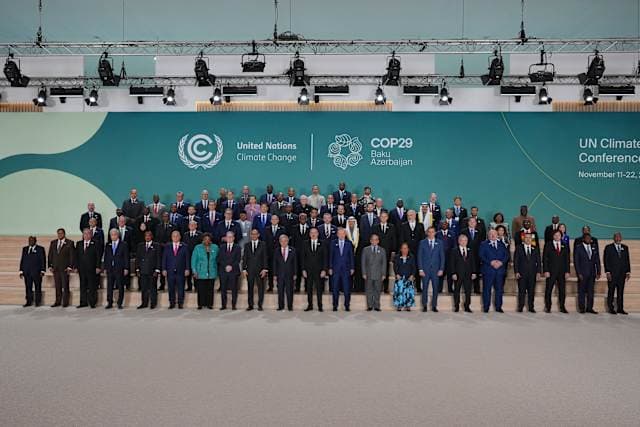
The 2026 UN Climate Weeks, slated for the Republic of Korea and Azerbaijan, mark a pivotal shift in the global climate action landscape. This isn't just another series of meetings; it's a strategic move by the UN to bridge the gap between high-level policy negotiations and the tangible, on-the-ground actions necessary to achieve the goals of the Paris Agreement. The choice of these two nations signals a deliberate effort to engage diverse perspectives and leverage regional strengths in addressing climate change. We're seeing early adopters in both regions already laying the groundwork, anticipating increased investment and collaboration. Conversations in private Slack channels suggest significant interest from cleantech startups looking to capitalize on the momentum. However, the success of these climate weeks hinges on genuine commitment from all stakeholders, translating pledges into concrete actions, and addressing the inherent challenges in balancing economic development with environmental sustainability. The friction lies in ensuring that these events don't become mere talking shops, but rather catalysts for transformative change.
Table of Contents
- Historical Context: UN Climate Weeks
- Strategic Significance: Korea & Azerbaijan
- The Paris Agreement Connection
- Economic Implications: Green Investments and Job Creation
- Technological Innovations on Display
- Geopolitical Dynamics: Regional Collaboration
- Potential Challenges and Criticisms
- Expert Perspectives: Pro Tips for Stakeholders
- Future Predictions: Long-Term Impact
- Frequently Asked Questions (FAQ)
- Conclusion: A Call to Action
1. Historical Context: UN Climate Weeks
UN Climate Weeks aren't new, but their importance is escalating. They've evolved from relatively low-profile regional gatherings to significant platforms for advancing climate action. Historically, these weeks have served as crucial stepping stones in the lead-up to the annual Conference of the Parties (COP), providing opportunities for governments, businesses, and civil society organizations to share best practices, forge partnerships, and mobilize resources.
Before the Paris Agreement, the UN climate process was often characterized by slow progress and a lack of concrete commitments. The Agreement, adopted in 2015, changed the game, setting a long-term goal of limiting global warming to well below 2 degrees Celsius above pre-industrial levels. UN Climate Weeks have since become instrumental in driving the implementation of the Nationally Determined Contributions (NDCs), the individual climate action plans pledged by each country.
The early climate weeks primarily focused on awareness-raising and capacity building. However, in recent years, there's been a growing emphasis on action-oriented outcomes, with a focus on identifying scalable solutions and attracting investment in climate-friendly technologies. This shift reflects a recognition that tackling climate change requires not just political will but also technological innovation and financial resources.
2. Strategic Significance: Korea & Azerbaijan
The selection of the Republic of Korea and Azerbaijan as hosts for the 2026 UN Climate Weeks is no accident. Both countries offer unique opportunities and strategic advantages for advancing the climate agenda. South Korea, a technological powerhouse and a major economy in Asia, is well-positioned to showcase innovative climate solutions and mobilize investment in green technologies. Its commitment to achieving carbon neutrality by 2050 demonstrates its ambition to lead the way in decarbonizing its economy.
Azerbaijan, on the other hand, presents a different but equally compelling case. As a country heavily reliant on fossil fuels, Azerbaijan's engagement in the climate process signals a willingness to diversify its economy and transition towards a more sustainable development pathway. Hosting a climate week in Azerbaijan provides an opportunity to showcase the country's efforts to reduce its carbon footprint, promote renewable energy, and invest in climate resilience.
Furthermore, both countries are strategically located to engage with their respective regions. South Korea can serve as a hub for climate action in East Asia, while Azerbaijan can play a similar role in the Caucasus and Central Asia. This regional focus is crucial for fostering collaboration and sharing best practices across borders.
3. The Paris Agreement Connection
The UN Climate Weeks are explicitly designed to support the implementation of the Paris Agreement. This connection is paramount. The Paris Agreement established a framework for global climate action, but it relies on individual countries to set their own targets and implement their own policies. The Climate Weeks provide a platform for countries to share their experiences, learn from each other, and identify opportunities for enhanced cooperation.
Specifically, the 2026 Climate Weeks will focus on connecting negotiated outcomes with real-world action. This means translating the high-level political commitments made at COP into tangible projects and initiatives on the ground. The goal is to accelerate the pace of climate action and ensure that the world is on track to meet the goals of the Paris Agreement.
We're observing a growing demand for clear pathways to achieve Net-Zero. The 2026 Climate Weeks should provide that clarity, showcasing concrete examples of how countries and businesses are decarbonizing their operations, investing in renewable energy, and building climate resilience. The
Deep Dives Similar to This
France plans to increase its nuclear arsenal and enhance European weapons cooperation, sparking debate about a new arms race.
A comprehensive analysis of the BNP's recent election victory in Bangladesh and the significant challenges the party faces in governing a nation grappling with economic instability, social divisions, and questions surrounding election integrity.
Pakistan declares 'open war' on Afghanistan after cross-border strikes. Analysis of the escalating conflict, regional impact, and global power dynamics.