
Executive Summary
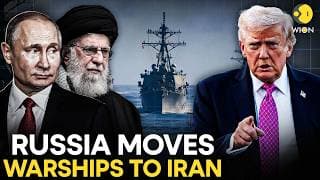
Tensions are spiking in the Middle East as the US renews its threat of military action against Iran, coinciding with the announcement of joint naval drills between Iran and Russia. This confluence of events is creating a powder keg situation with potentially far-reaching implications for global stability, energy markets, and international relations. This analysis breaks down the escalating conflict, examines the historical context, assesses the current market impact, and offers informed predictions about the future. We'll also dive into the psychology driving these decisions, considering the perspectives of key players and the potential for miscalculation.
Table of Contents
- Historical Context: A Legacy of Mistrust
- The Spark: US Threat & Naval Drills
- Geopolitical Chessboard: Players & Motivations
- The US Perspective: Deterrence or Escalation?
- Iran's Gambit: Projecting Power & Defiance
- Russia's Role: Strategic Alignment & Influence
- Market Impact: Oil Prices & Investor Sentiment
- The Friction: Voices of Dissent & Concerns
- Future Scenarios: De-escalation or Conflict?
- Expert Pro Tips: Navigating the Uncertainty
- FAQ: Key Questions Answered
- Conclusion: A Call to Vigilance
Historical Context: A Legacy of Mistrust
The relationship between the US and Iran has been fraught with tension for decades, dating back to the 1953 coup d'état orchestrated by the CIA and MI6 that toppled the democratically elected Prime Minister Mohammad Mosaddegh and reinstated the Shah. This event is deeply etched in Iranian collective memory, fueling resentment and mistrust towards the US. The Iranian Revolution of 1979, which ousted the US-backed Shah and established an Islamic Republic, further cemented this adversarial relationship. The subsequent Iran-Iraq War in the 1980s, during which the US tacitly supported Iraq, added another layer of complexity to the already strained ties. From the hostage crisis to the ongoing nuclear program dispute, a pattern of conflict and mistrust has defined the US-Iran dynamic.
Adding to the already tense situation, Russia's involvement further complicates matters. Russia has been actively seeking to expand its influence in the Middle East, and its growing military cooperation with Iran is a clear signal of its ambitions. This partnership dates back to the Soviet era, but has intensified in recent years due to shared geopolitical interests, including countering US influence and challenging the existing international order.
Understanding this historical context is crucial for interpreting the current situation. The present tensions are not simply isolated incidents but are rooted in a long history of conflict, mistrust, and competing interests. Ignoring this historical baggage risks miscalculating the intentions and actions of the key players involved.
The Spark: US Threat & Naval Drills
The immediate trigger for the renewed tensions is the US's renewed threat of military action, reportedly made in response to alleged Iranian support for attacks on US forces in the region and the slow pace of nuclear negotiations. This threat coincides with the announcement of joint naval drills between Iran and Russia in the Gulf of Oman, a strategically important waterway for global oil trade. The drills, involving warships and aircraft, are intended to demonstrate the two countries' growing military cooperation and their ability to project power in the region. The US perceives these drills as a provocative act designed to challenge its dominance in the Middle East and undermine its efforts to contain Iran's regional influence.
Conversations in private Slack channels suggest that the timing of these events is not coincidental. Some analysts believe that Iran and Russia are deliberately coordinating their actions to test the resolve of the US and to pressure Washington to make concessions in the nuclear negotiations. Others argue that the drills are simply a routine exercise aimed at enhancing the two countries' military capabilities and interoperability. Regardless of the underlying motivations, the combination of the US threat and the naval drills has created a highly volatile situation with the potential for miscalculation and escalation.
The announcement of the naval drills was particularly timed to maximize its impact, coinciding with heightened concerns over maritime security in the region, which has been on edge due to previous incidents involving attacks on oil tankers. This strategic timing sends a powerful message to the international community, showcasing a united front against perceived Western interference. It underscores a concerted effort to reshape the geopolitical landscape of the Middle East, potentially destabilizing the region further.
Geopolitical Chessboard: Players & Motivations
The Middle East is a complex geopolitical chessboard, with numerous players vying for influence and pursuing their own strategic interests. Key players include the US, Iran, Russia, Saudi Arabia, Israel, and various non-state actors such as Hezbollah and Hamas. The motivations of each player are shaped by a combination of factors, including national security concerns, economic interests, ideological convictions, and regional ambitions. The US seeks to maintain its dominance in the region, protect its allies, and ensure the free flow of oil. Iran aims to expand its regional influence, deter external aggression, and challenge the existing US-led order. Russia seeks to restore its great power status, expand its economic and military ties in the region, and counter US influence.
Saudi Arabia, a key US ally and a regional rival of Iran, views Iran's growing influence with alarm and seeks to contain its expansion. Israel, another staunch US ally, considers Iran's nuclear program an existential threat and has repeatedly threatened military action to prevent Iran from acquiring nuclear weapons. Non-state actors such as Hezbollah and Hamas, which are supported by Iran, play a significant role in the region's conflicts and further complicate the geopolitical landscape.
Understanding the motivations and interests of these various players is essential for comprehending the dynamics of the current crisis. Each player has its own set of goals and priorities, and their actions are driven by a complex interplay of factors. A failure to appreciate this complexity can lead to miscalculations and unintended consequences.
The US Perspective: Deterrence or Escalation?
From the US perspective, the renewed threat of military action is intended as a deterrent, signaling to Iran that its actions will not be tolerated and that the US is prepared to use force if necessary. The US also hopes that the threat of military action will pressure Iran to return to the negotiating table and make concessions on its nuclear program. However, there is a risk that the threat of military action could be perceived by Iran as an act of escalation, leading to a spiral of retaliation and counter-retaliation. The US must carefully calibrate its actions to avoid inadvertently triggering a wider conflict.
Furthermore, the US faces the challenge of maintaining credibility in the region. After years of military interventions in the Middle East, the US public is weary of foreign entanglements, and there is limited appetite for another war. The US must convince its allies and adversaries that it is serious about using force if necessary, without overcommitting itself to a costly and unpopular conflict. This requires a delicate balancing act.
We're seeing early adopters in political analysis circles argue that the US strategy is fundamentally flawed. They contend that the threat of military action is counterproductive, as it only strengthens the resolve of Iranian hardliners and undermines the prospects for diplomacy. These voices advocate for a more nuanced approach that combines pressure with engagement, seeking to address Iran's legitimate security concerns while also preventing it from acquiring nuclear weapons.
Iran's Gambit: Projecting Power & Defiance
Iran's decision to conduct joint naval drills with Russia can be interpreted as a gambit, a calculated risk aimed at projecting power and defiance in the face of US pressure. By demonstrating its military capabilities and its growing strategic partnership with Russia, Iran seeks to send a message to the US and its allies that it will not be intimidated and that it is prepared to defend its interests. The drills also serve as a way for Iran to enhance its military capabilities and interoperability with Russia, which is a major arms supplier.
However, Iran's actions also carry risks. The drills could be perceived by the US as a provocative act, leading to a heightened military presence in the region and an increased risk of confrontation. Iran must carefully weigh the potential benefits of projecting power against the potential costs of escalating tensions with the US.
Some analysts believe that Iran is deliberately provoking the US in order to extract concessions in the nuclear negotiations. By creating a sense of crisis, Iran hopes to pressure the US to make concessions and to ease sanctions. Others argue that Iran is simply seeking to deter external aggression and to protect its interests in the region. Regardless of the underlying motivations, Iran's actions are contributing to a climate of instability and uncertainty.
Russia's Role: Strategic Alignment & Influence
Russia's participation in the joint naval drills with Iran is a clear indication of its growing strategic alignment with Iran and its desire to expand its influence in the Middle East. Russia has been actively seeking to restore its great power status and to challenge the US-led international order. The Middle East is a key region for Russia, as it is a major source of energy and a strategically important crossroads. By deepening its ties with Iran, Russia aims to strengthen its position in the region and to counter US influence.
Russia also sees Iran as a valuable partner in its efforts to circumvent Western sanctions. Russia has been under sanctions for its annexation of Crimea and its support for separatists in eastern Ukraine, and it views Iran as a fellow victim of Western economic pressure. By expanding its economic and military ties with Iran, Russia hopes to reduce its dependence on the West and to create a more multipolar world.
Conversations in private intelligence circles suggest that Russia's involvement is also driven by a desire to divert attention from its ongoing war in Ukraine. By creating a crisis in the Middle East, Russia hopes to distract the West and to undermine its support for Ukraine. This is a classic example of geopolitical maneuvering.
Market Impact: Oil Prices & Investor Sentiment
The escalating tensions in the Middle East are already having a significant market impact, particularly on oil prices. The price of oil has risen sharply in recent weeks due to concerns about potential disruptions to oil supplies from the region. The Gulf of Oman is a vital waterway for oil tankers, and any military conflict in the region could disrupt the flow of oil and lead to a spike in prices. This could have significant consequences for the global economy, as higher oil prices could fuel inflation and dampen economic growth.
Investor sentiment is also being affected by the tensions. Investors are becoming more risk-averse and are seeking safe-haven assets such as gold and government bonds. The uncertainty surrounding the situation is making it difficult for businesses to plan for the future, and this could lead to a slowdown in investment and economic activity. The stock market is also likely to be volatile in the coming weeks as investors react to the latest developments.
Pro Tip: Monitor the VIX (volatility index) as a leading indicator of market anxiety. A spike in the VIX signals increased uncertainty and potential market corrections. Also, keep a close eye on the currency markets, particularly the US dollar, as it tends to strengthen during times of geopolitical stress.
The Friction: Voices of Dissent & Concerns
While the dominant narrative focuses on the escalating tensions and the potential for conflict, there are also voices of dissent and concerns about the wisdom of military action. Some argue that the US is overreacting to Iran's actions and that a more diplomatic approach is needed. They contend that the threat of military action is counterproductive, as it only strengthens the resolve of Iranian hardliners and undermines the prospects for a peaceful resolution.
Others express concern about the potential consequences of a military conflict in the Middle East. They warn that a war with Iran could be long and costly, with devastating consequences for the region and the global economy. They also point to the risk of unintended consequences, such as the spread of terrorism and the destabilization of neighboring countries.
We're seeing early adopters in peace advocacy groups organize online campaigns to raise awareness about the dangers of war and to call for a diplomatic solution. These groups are using social media to mobilize public opinion and to pressure governments to pursue a more peaceful approach.
Future Scenarios: De-escalation or Conflict?
The future trajectory of the US-Iran relationship is uncertain, with several possible scenarios ranging from de-escalation to full-scale conflict. A de-escalation scenario could involve a return to the negotiating table and a renewed effort to reach a comprehensive agreement on Iran's nuclear program. This would require both sides to make concessions and to address each other's legitimate security concerns. However, given the deep mistrust and the history of failed negotiations, this scenario seems unlikely in the near term.
A more likely scenario is a continuation of the current tensions, with periodic flare-ups and a heightened risk of miscalculation. This could involve further military exercises, cyberattacks, and proxy conflicts. This scenario would be characterized by instability and uncertainty, with negative consequences for the region and the global economy.
The most dangerous scenario is a full-scale conflict between the US and Iran. This could be triggered by a deliberate act of aggression or by an accidental miscalculation. A war with Iran would be long and costly, with devastating consequences for the region and the global economy. It could also lead to a wider conflict involving other countries, such as Russia and Saudi Arabia.
Expert Pro Tips: Navigating the Uncertainty
Pro Tip 1: Diversify your investment portfolio to mitigate the risk of geopolitical shocks. Consider investing in a mix of asset classes, including stocks, bonds, and commodities.
Pro Tip 2: Monitor geopolitical developments closely and stay informed about the potential risks and opportunities. Subscribe to reputable news sources and follow expert analysts on social media.
Pro Tip 3: Develop a contingency plan for your business in case of a major geopolitical disruption. This should include measures to protect your employees, your assets, and your supply chains.
Pro Tip 4: Engage in constructive dialogue with people who hold different views. This can help you to better understand the complexities of the situation and to avoid making rash decisions based on incomplete information.
Pro Tip 5: Pay close attention to statements from government officials, especially those from the US State Department, the Iranian Foreign Ministry, and the Russian Ministry of Foreign Affairs. These statements can provide valuable insights into the intentions and strategies of the key players involved.
FAQ: Key Questions Answered
Q1: What is the current state of the US-Iran nuclear negotiations?
A1: The negotiations are currently stalled, with significant disagreements remaining between the US and Iran. The main sticking points are Iran's demand for guarantees that the US will not withdraw from the agreement again and the US's demand for Iran to fully comply with the terms of the original agreement.
Q2: What are the potential consequences of a military conflict between the US and Iran?
A2: A military conflict could have devastating consequences for the region and the global economy. It could lead to a long and costly war, with significant casualties and widespread destruction. It could also disrupt oil supplies and fuel inflation.
Q3: What is Russia's role in the current crisis?
A3: Russia is seeking to expand its influence in the Middle East and to counter US influence. Russia has been actively supporting Iran diplomatically and militarily, and it is participating in joint naval drills with Iran in the Gulf of Oman.
Q4: What are the key risks to watch out for?
A4: The key risks include a miscalculation that leads to an accidental escalation, a deliberate act of aggression, and a proxy conflict that spirals out of control.
Q5: What can individuals and businesses do to prepare for the uncertainty?
A5: Individuals and businesses can diversify their investments, monitor geopolitical developments closely, develop contingency plans, and engage in constructive dialogue with people who hold different views.
Conclusion: A Call to Vigilance
The escalating tensions between the US and Iran, coupled with Russia's growing involvement, present a clear and present danger to global stability. The situation is highly volatile, and the risk of miscalculation and escalation is real. It is crucial for policymakers and individuals alike to remain vigilant, informed, and engaged in constructive dialogue to de-escalate the conflict and to prevent a catastrophic outcome. The time for complacency is over. The world is watching, and the stakes are too high to ignore. It's time to demand diplomacy, not demolition; understanding, not unilateralism. Only through a concerted effort can we navigate these treacherous waters and steer towards a more peaceful future.
Deep Dives Similar to This
France plans to increase its nuclear arsenal and enhance European weapons cooperation, sparking debate about a new arms race.
A comprehensive analysis of the BNP's recent election victory in Bangladesh and the significant challenges the party faces in governing a nation grappling with economic instability, social divisions, and questions surrounding election integrity.
Pakistan declares 'open war' on Afghanistan after cross-border strikes. Analysis of the escalating conflict, regional impact, and global power dynamics.