
Executive Summary
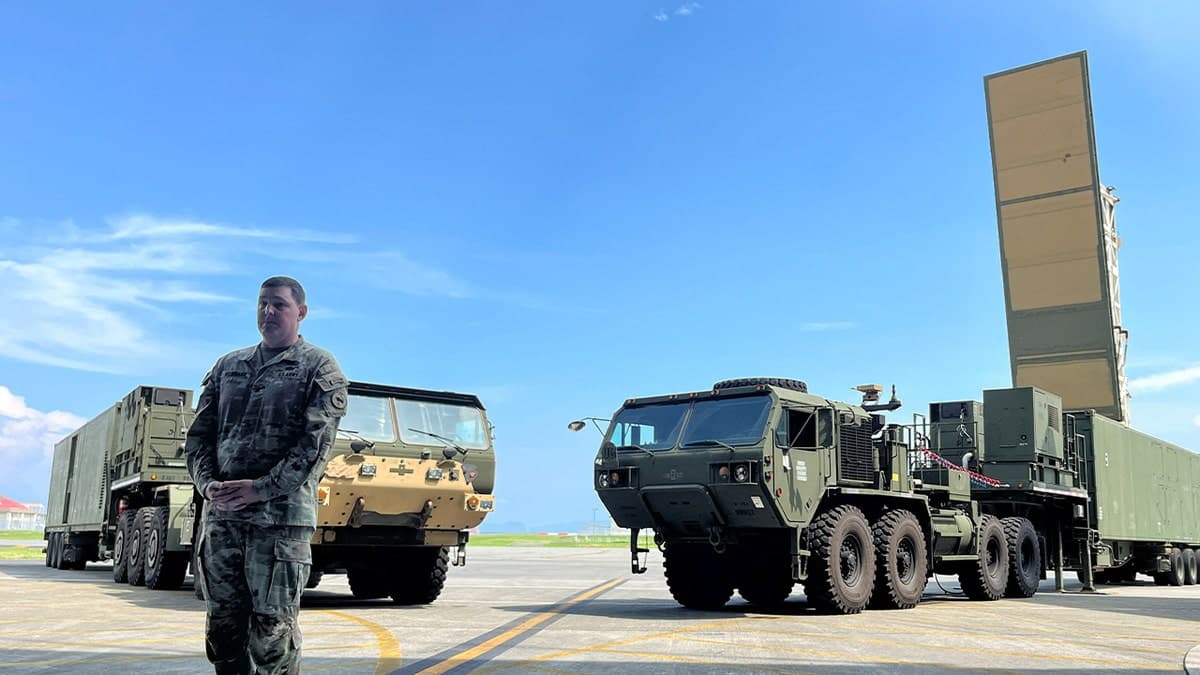
The United States is reportedly planning to deploy missile launchers to the Philippines. This move, intended to bolster regional security and counter China's increasing assertiveness in the South China Sea, has immediately sparked controversy and raised significant geopolitical concerns. It's a high-stakes chess move with potentially far-reaching implications for US-China relations, regional stability, and the future of maritime security in Southeast Asia.
This isn't just about hardware; it's about signaling. Washington is clearly communicating its resolve to defend its allies and maintain a balance of power in the region. But Beijing views this as a direct challenge to its territorial claims and strategic ambitions. The deployment could trigger a cascade of reactions, from diplomatic protests to increased military activity in the South China Sea.
Table of Contents
- Historical Context: US-Philippines Security Ties
- The Missile Deployment Plan: Details and Scope
- China's Perspective: A Red Line Crossed?
- Regional Reactions: ASEAN's Balancing Act
- Military Implications: Shifting the Balance of Power
- Diplomatic Fallout: The Art of the Deal, or a Recipe for Conflict?
- Economic Impact: Trade Winds and Troubled Waters
- The Friction: Skeptics and Counterarguments
- Future Predictions: Scenarios and احتمالات
- Expert Pro Tips: Navigating the Geopolitical Landscape
- FAQ: Your Burning Questions Answered
- Conclusion: A Time for Prudence and Strength
Historical Context: US-Philippines Security Ties
The relationship between the United States and the Philippines is a complex tapestry woven with threads of colonialism, Cold War alliances, and enduring strategic partnerships. The Philippines, a former US colony, gained independence in 1946 but retained close ties with Washington, solidified by the Mutual Defense Treaty of 1951. This treaty, a cornerstone of US security policy in the Asia-Pacific, commits both nations to defend each other in case of external aggression.
During the Cold War, the Philippines hosted two major US military bases: Clark Air Base and Subic Bay Naval Base. These bases were critical for projecting US power throughout the region and containing Soviet influence. However, rising nationalism and anti-American sentiment in the Philippines led to the closure of these bases in the early 1990s. It marked a significant shift in the dynamics of the relationship, yet the underlying strategic importance remained.
In recent years, as China's power has grown and its assertiveness in the South China Sea has increased, the US-Philippines alliance has been revitalized. The Enhanced Defense Cooperation Agreement (EDCA), signed in 2014, allows the US military to maintain a rotational presence in the Philippines and to preposition equipment and supplies. This agreement is now at the center of the planned missile deployment, underscoring the evolving nature of the alliance in response to new geopolitical realities. Understanding this history is crucial to grasping the current situation; it provides the context for the concerns, expectations, and potential consequences that surround this deployment.
The Missile Deployment Plan: Details and Scope
The specifics of the missile deployment plan remain somewhat opaque, but available information suggests a phased approach involving the deployment of land-based missile launchers capable of firing anti-ship missiles and potentially other types of munitions. We're hearing early adopters in defense circles discussing the potential inclusion of systems like the High Mobility Artillery Rocket System (HIMARS), known for its versatility and rapid deployment capabilities, and the Naval Strike Missile (NSM), a highly accurate and stealthy anti-ship missile.
The intended deployment sites are believed to be strategically located in the northern Philippines, facing Taiwan, and in areas along the South China Sea. This positioning would allow the US and the Philippines to better monitor and potentially deter Chinese military activity in the region. The scope of the deployment is expected to be relatively limited initially, with a gradual increase in the number of launchers and personnel over time. Conversations in private Slack channels suggest the US is also considering joint training exercises with the Philippine military to enhance interoperability and operational readiness.
This isn't just about offensive capabilities. The missile deployment also serves a defensive purpose, enhancing the Philippines' ability to protect its territorial waters and deter potential aggression. It's a clear signal to China that the US is committed to upholding its treaty obligations and maintaining a balance of power in the region. However, the deployment also carries risks, potentially escalating tensions and triggering a response from Beijing. The exact configuration of the missile systems, their range, and the rules of engagement will be critical factors in determining the impact of this deployment.
China's Perspective: A Red Line Crossed?
From Beijing's perspective, the US missile deployment in the Philippines is a provocative act that directly threatens its core interests. China views the South China Sea as its own backyard and considers US military activity in the region as unwarranted interference. The deployment of missiles, particularly those capable of targeting Chinese naval vessels, is seen as a deliberate attempt to contain China's rise and undermine its regional influence. It's perceived as a direct challenge to its sovereignty and territorial claims.
China's reaction is likely to be multi-faceted. We can anticipate strong diplomatic protests, condemnation in state-controlled media, and potentially increased military activity in the South China Sea. Beijing may also retaliate economically, imposing sanctions or restrictions on trade with the Philippines. Some analysts even suggest the possibility of China increasing its military presence on disputed islands in the South China Sea or conducting provocative exercises in the region. The phrase being tossed around is a “new normal of escalation”.
It's important to understand that China's concerns are not solely based on military considerations. Beijing also views the US missile deployment as part of a broader strategy to encircle and contain China. This perception fuels suspicion and mistrust, making it more difficult to find common ground and manage disagreements peacefully. The deployment also plays into the narrative of the “China threat” propagated by some in the US, further exacerbating tensions and hardening positions on both sides.
Regional Reactions: ASEAN's Balancing Act
The Association of Southeast Asian Nations (ASEAN) finds itself in a delicate position. While some member states may welcome the US missile deployment as a counterweight to China's growing power, others are wary of being drawn into a conflict between the two superpowers. ASEAN's principle of non-interference in the internal affairs of member states also makes it difficult to take a unified stance on the issue.
Countries like Vietnam and the Philippines, which have territorial disputes with China in the South China Sea, may see the US missile deployment as a welcome deterrent. However, they are also mindful of the need to maintain stable relations with Beijing, a major economic partner. Other ASEAN members, such as Cambodia and Laos, which have closer ties to China, are likely to be more cautious in their response, emphasizing the need for dialogue and peaceful resolution of disputes. The underlying feeling is that any instability hurts all parties involved.
The challenge for ASEAN is to navigate these competing interests and maintain its unity and centrality in regional affairs. The organization is likely to call for restraint from all parties and to promote dialogue and diplomacy as the primary means of resolving disputes. However, the US missile deployment has undoubtedly added a new layer of complexity to the regional landscape, forcing ASEAN to carefully calibrate its response and avoid being caught in the crossfire of great power competition.
Military Implications: Shifting the Balance of Power
The deployment of US missile launchers to the Philippines has significant military implications for the region. It enhances the defensive capabilities of the Philippines, strengthens the US military presence in Southeast Asia, and potentially alters the balance of power in the South China Sea. The ability to project power and deter aggression is significantly bolstered by this move.
The missiles deployed could be used to target Chinese naval vessels operating in the South China Sea, potentially deterring China from taking aggressive actions against the Philippines or other countries in the region. The deployment also provides the US with greater situational awareness and the ability to respond quickly to emerging threats. The strategic placement of these missile systems is critical to maximizing their impact, and the US military is likely to conduct extensive simulations and exercises to refine its operational plans.
However, the deployment also carries risks. It could trigger an arms race in the region, with China and other countries responding by increasing their own military capabilities. It could also lead to miscalculations or accidental escalations, particularly in a region where tensions are already high. The military implications of the deployment are therefore complex and far-reaching, requiring careful consideration and prudent management.
Diplomatic Fallout: The Art of the Deal, or a Recipe for Conflict?
The diplomatic fallout from the US missile deployment is likely to be significant and could further strain relations between the US and China. Beijing has already condemned the move, and we can expect further diplomatic protests and possibly retaliatory actions. The deployment also complicates efforts to resolve the South China Sea dispute through dialogue and negotiation. Diplomats are likely burning the midnight oil attempting to defuse the situation.
The US will likely attempt to reassure China that the deployment is purely defensive in nature and not intended to threaten its security. However, this message may be difficult to convey, given the existing tensions and mistrust between the two countries. The US may also seek to rally support from its allies and partners in the region, emphasizing the importance of maintaining a rules-based order and deterring aggression.
The success of these diplomatic efforts will depend on a number of factors, including the willingness of both sides to engage in constructive dialogue, the ability to manage disagreements peacefully, and the avoidance of actions that could escalate tensions. The art of diplomacy will be crucial in navigating this complex situation and preventing a further deterioration of US-China relations. It's a tightrope walk with high stakes.
Economic Impact: Trade Winds and Troubled Waters
The US missile deployment could have significant economic consequences for the region. Increased tensions and the risk of conflict could disrupt trade flows, discourage investment, and undermine economic growth. The South China Sea is a vital shipping lane, and any disruption to navigation could have a major impact on global trade. Businesses operating in the region are watching the situation closely.
China is a major economic partner for many countries in Southeast Asia, and any deterioration in relations between China and the US could have ripple effects throughout the region. Some countries may be forced to choose between aligning themselves with either the US or China, which could have significant economic implications. The economic impact of the deployment is therefore complex and multifaceted, requiring careful consideration and proactive risk management. We’re seeing early adopters in investment firms adjusting their portfolios to account for increased volatility.
However, the deployment could also create new economic opportunities. Increased defense spending could boost local economies, and the development of new technologies could create new jobs and industries. The economic impact of the deployment will depend on how the situation unfolds and how countries in the region respond.
The Friction: Skeptics and Counterarguments
Not everyone agrees that the US missile deployment is a wise move. Skeptics argue that it could be counterproductive, escalating tensions with China without significantly enhancing regional security. Some argue that the deployment is primarily intended to serve US interests, rather than the interests of the Philippines or other countries in the region. There's a belief circulating that the US is using the Philippines as a pawn in a larger geopolitical game.
Critics also point out that the deployment could make the Philippines a target for Chinese retaliation. In the event of a conflict, the missile launchers would likely be among the first targets, putting the Philippines at risk. Others question the effectiveness of the deployment, arguing that China could easily overwhelm the missile defenses with its own military capabilities. The contrarian view is that diplomacy and economic engagement are more effective tools for managing relations with China than military deployments.
These counterarguments highlight the complexities and potential risks of the US missile deployment. It's important to consider these perspectives and to avoid a simplistic or overly optimistic view of the situation. The reality is far more nuanced.
Future Predictions: Scenarios and احتمالات
The future of the US missile deployment and its impact on the region are uncertain. Several scenarios are possible, ranging from a peaceful resolution of disputes to a full-blown conflict. The most likely scenario is a continuation of the current state of heightened tensions, with periodic flare-ups and diplomatic maneuvering. However, other scenarios cannot be ruled out.
- Scenario 1: Peaceful Resolution. Through dialogue and negotiation, the US and China reach an understanding that allows them to manage their disagreements peacefully and avoid escalating tensions. The missile deployment remains in place, but both sides exercise restraint and avoid provocative actions.
- Scenario 2: Escalation. Tensions continue to rise, leading to increased military activity and the risk of miscalculation or accidental conflict. The missile deployment becomes a major point of contention, and both sides engage in a tit-for-tat escalation of military deployments and exercises.
- Scenario 3: Conflict. A miscalculation or accidental incident triggers a full-blown conflict between the US and China, with devastating consequences for the region and the world. The missile deployment plays a key role in the conflict, and both sides suffer significant losses.
Predicting the future is impossible, but by considering these different scenarios, we can better prepare for the challenges and opportunities that lie ahead. The key will be to manage tensions prudently, promote dialogue and diplomacy, and avoid actions that could escalate the situation.
Expert Pro Tips: Navigating the Geopolitical Landscape
Here are some expert pro tips for navigating the geopolitical landscape in the wake of the US missile deployment:
- Pro Tip 1: Stay informed. Keep abreast of the latest developments in the region and be aware of the potential risks and opportunities. Rely on credible sources of information and avoid spreading misinformation.
- Pro Tip 2: Diversify your investments. Reduce your exposure to risk by diversifying your investments across different sectors and countries. Avoid putting all your eggs in one basket.
- Pro Tip 3: Build relationships. Cultivate strong relationships with key stakeholders in the region, including government officials, business leaders, and academics. Networking is crucial.
- Pro Tip 4: Be prepared for volatility. Expect increased volatility in financial markets and be prepared to adjust your strategies accordingly. Don't panic sell.
- Pro Tip 5: Advocate for peaceful resolution. Support efforts to promote dialogue and diplomacy and to resolve disputes peacefully. Your voice matters.
FAQ: Your Burning Questions Answered
- Q: What is the US rationale for deploying missiles to the Philippines?
- A: The US states it's to enhance regional security, deter aggression, and uphold its treaty obligations to the Philippines, acting as a counterweight to China's increasing assertiveness in the South China Sea.
- Q: How will China likely respond to the missile deployment?
- A: Expect strong diplomatic protests, increased military activity in the South China Sea, and potentially economic retaliation against the Philippines. The extent of the response depends on Beijing’s assessment of the threat and its broader strategic goals.
- Q: What are the potential risks of the missile deployment?
- A: The risks include escalating tensions with China, triggering an arms race, making the Philippines a target for retaliation, and increasing the risk of miscalculation or accidental conflict.
- Q: What is ASEAN's likely position on the issue?
- A: ASEAN will likely call for restraint from all parties and promote dialogue and diplomacy as the primary means of resolving disputes. However, individual member states may have differing views depending on their relations with the US and China.
- Q: How could the missile deployment affect businesses operating in the region?
- A: Increased tensions and the risk of conflict could disrupt trade flows, discourage investment, and undermine economic growth. Businesses should be prepared for increased volatility and proactively manage their risks.
Conclusion: A Time for Prudence and Strength
The US missile deployment to the Philippines is a high-stakes gamble with potentially far-reaching consequences. It's a move that reflects the growing tensions in the region and the intensifying competition between the US and China. While the deployment may be intended to deter aggression and enhance regional security, it also carries significant risks. We are potentially looking at the start of a new Cold War.
The path forward requires a delicate balance of prudence and strength. The US must remain committed to its allies and to upholding a rules-based order in the region, but it must also avoid actions that could escalate tensions or provoke a conflict. Dialogue and diplomacy are essential, but they must be backed by credible deterrence and a willingness to defend our interests. The Philippines, caught in the middle, must navigate this situation with wisdom and foresight, prioritizing its own security and economic well-being.
Ultimately, the future of the region depends on the choices that are made today. Let us hope that wisdom and restraint prevail, and that we can find a way to manage our differences peacefully and build a more stable and prosperous future for all. It's time for cool heads and clear strategies. It's time for action. Advocate for diplomatic solutions, but prepare for any possible outcome.
Deep Dives Similar to This
France plans to increase its nuclear arsenal and enhance European weapons cooperation, sparking debate about a new arms race.
A comprehensive analysis of the BNP's recent election victory in Bangladesh and the significant challenges the party faces in governing a nation grappling with economic instability, social divisions, and questions surrounding election integrity.
Pakistan declares 'open war' on Afghanistan after cross-border strikes. Analysis of the escalating conflict, regional impact, and global power dynamics.