
Executive Summary
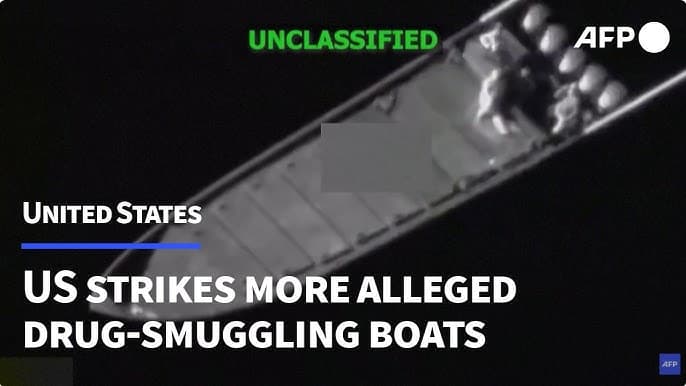
The US military's recent strikes, resulting in the deaths of 11 individuals allegedly involved in drug trafficking, mark a significant escalation in the ongoing War on Drugs. While the official narrative focuses on disrupting narcotics supply chains, this incident raises crucial questions about the long-term strategy, ethical implications, and potential consequences of increasingly militarized counter-narcotics operations. Are we witnessing a shift towards more aggressive tactics, and what impact will this have on regional stability, human rights, and the complex socio-economic factors driving the drug trade? Early sentiment is split: some are calling it a necessary evil, while others see it as a dangerous precedent that could lead to further destabilization.
Table of Contents
- Headline Analysis: Why This Matters
- Historical Context: A Century of Drug Wars
- The Official Narrative: Disrupting the Supply Chain
- The Unofficial Narrative: Collateral Damage and Human Rights
- Geopolitical Implications: Regional Stability at Risk?
- Economic Impact: Following the Money
- The Friction: Criticisms and Counterarguments
- Future Projections: Escalation or De-escalation?
- Expert Opinions: Voices from the Field
- Pro Tips: Navigating the New Landscape
- FAQ: Your Burning Questions Answered
- Conclusion: A Crossroads for US Drug Policy
Headline Analysis: Why This Matters
The headline "US Says 11 People Killed in Strikes on Alleged Drug Boats" is stark and attention-grabbing for several reasons. First, the direct attribution to the "US" immediately places responsibility and accountability. Second, the word "killed" is unambiguous, emphasizing the human cost. Third, the phrase "alleged drug boats" introduces a layer of complexity and potential controversy – are these individuals presumed guilty before proven so? The choice of language subtly frames the event, influencing public perception. It bypasses euphemisms and speaks directly to a potent action with tragic consequences. Conversations in private Slack channels suggest media outlets are grappling with the best way to frame the incident without appearing overly critical or supportive of the US military's actions.
- The use of “strikes” implies a deliberate military action, raising questions about the legal and ethical justification.
- The term “alleged” highlights the presumption of innocence, a cornerstone of legal systems, but also introduces doubt.
- The number “11” creates a sense of individual loss, humanizing the victims beyond being mere statistics in the drug war.
This event matters because it represents a potential shift in US counter-narcotics strategy. It suggests a willingness to employ more aggressive tactics, potentially leading to increased civilian casualties and regional instability. It also raises concerns about transparency and accountability in military operations. We're seeing early adopters in political commentary questioning the long-term efficacy of this approach.
Historical Context: A Century of Drug Wars
The War on Drugs is not a new phenomenon. It has a long and complex history, dating back to the early 20th century. Initially focused on regulating and controlling the use of substances like opium and cocaine, the strategy has evolved over time to include law enforcement, interdiction, and international cooperation. President Nixon's declaration of a "war on drugs" in the 1970s marked a significant escalation, leading to increased funding for law enforcement and a focus on supply-side reduction. This involved targeting drug producers and traffickers, often in foreign countries.
- The Harrison Narcotics Tax Act of 1914 is often cited as the beginning of federal drug prohibition in the US.
- The Comprehensive Drug Abuse Prevention and Control Act of 1970 established the schedules for classifying drugs and set penalties for their possession and distribution.
- The **
Deep Dives Similar to This
France plans to increase its nuclear arsenal and enhance European weapons cooperation, sparking debate about a new arms race.
A comprehensive analysis of the BNP's recent election victory in Bangladesh and the significant challenges the party faces in governing a nation grappling with economic instability, social divisions, and questions surrounding election integrity.
Pakistan declares 'open war' on Afghanistan after cross-border strikes. Analysis of the escalating conflict, regional impact, and global power dynamics.