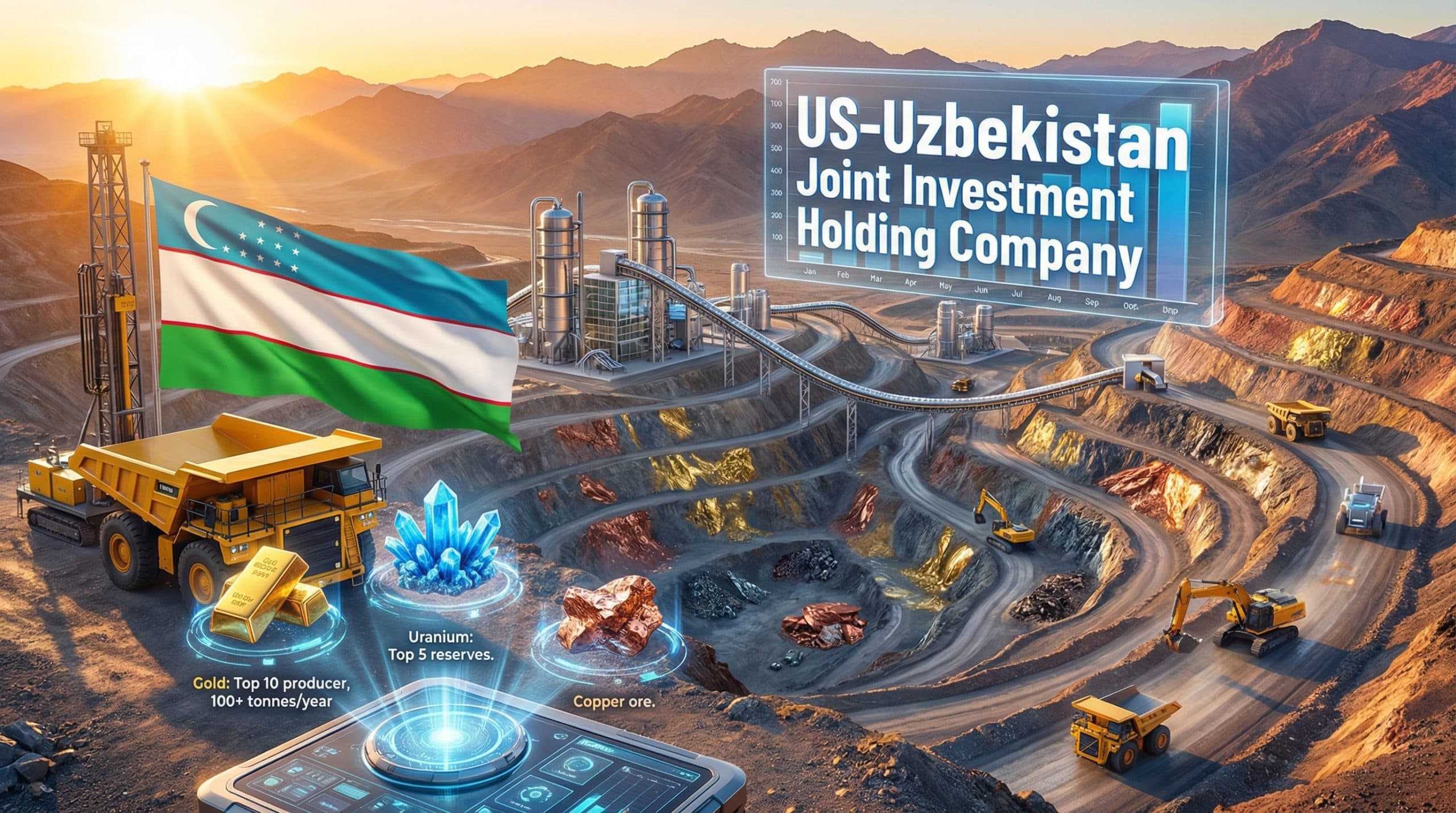

Executive Summary
The recent agreement between the United States and Uzbekistan concerning critical minerals isn't just another trade deal; it's a strategic chess move with potentially massive implications for global supply chains and geopolitical power. In a world scrambling to secure resources vital for everything from electric vehicles to defense systems, this pact plants a flag in Central Asia and signals a new era of resource partnerships. It's about more than just Uzbekistan's mineral wealth; it's about diversifying away from current dependencies and building resilient supply networks for the future.
This isn't just about digging stuff out of the ground. It's about setting standards, fostering responsible mining practices, and creating a framework for sustainable resource development. The human element here is crucial: communities in Uzbekistan and beyond will be directly affected by this agreement, and their voices need to be heard. It also opens doors for technology transfer, joint ventures, and economic growth in Uzbekistan, potentially lifting living standards and strengthening regional stability. However, there are serious challenges, including navigating Uzbekistan's complex political landscape and ensuring environmental safeguards are strictly enforced.
The bottom line? This pact is a big deal. It could reshape the critical minerals landscape, offering both opportunities and challenges for businesses, governments, and communities alike. Failing to capitalize on this moment would be a major strategic blunder.
Table of Contents
- Historical Context: Uzbekistan's Mineral Legacy
- The Critical Minerals in Play: A Deep Dive
- Geopolitical Implications: A Shifting Balance of Power
- Economic Impact on Uzbekistan: Boom or Bust?
- US Strategic Goals: Securing Supply Chains
- The Friction: Environmental and Social Concerns
- Industry Reactions: Winners and Losers
- Expert Opinions: Pro Tips for Navigating the Pact
- Future Predictions: What's Next for US-Uzbekistan Cooperation?
- FAQ: Your Questions Answered
- Conclusion: A Call to Action
Historical Context: Uzbekistan's Mineral Legacy
Uzbekistan isn't a newcomer to the mining game. For centuries, the region has been known for its vast reserves of various minerals. Its history is intertwined with the Silk Road, where minerals were traded alongside textiles and spices. Under Soviet rule, Uzbekistan became a major source of raw materials, with mining operations heavily focused on extracting resources to fuel the Soviet economy. This legacy has left a complex imprint, with some areas experiencing environmental degradation and social disruption. We're seeing efforts now to re-evaluate this legacy and move toward more sustainable and equitable mining practices.
It's important to understand that Uzbekistan's mineral wealth has always been both a blessing and a curse. While it has generated revenue and created jobs, it has also attracted external powers and fueled internal conflicts. The current agreement with the US is just the latest chapter in this long and complicated story. It represents an opportunity for Uzbekistan to leverage its resources for greater economic development, but it also carries the risk of exploitation and environmental damage. Getting the balance right is crucial.
Historically, the Uzbek government has maintained tight control over its mineral resources. However, in recent years, there has been a gradual opening up to foreign investment, driven by a desire to modernize the mining sector and attract international expertise. This pact with the US is a significant step in that direction, signaling a willingness to forge closer ties with Western powers and move away from traditional reliance on Russia and China. The human element here is about Uzbeks having more control over their own economic destiny.
The Critical Minerals in Play: A Deep Dive
This isn't just about any old rock. The minerals at the heart of this agreement are designated as "critical" because they are essential for various industries, including electronics, renewable energy, and defense. Uzbekistan possesses significant reserves of several of these key minerals, including uranium, gold, copper, and rare earth elements. The specific types and quantities of these minerals are closely guarded secrets, but industry whispers suggest the potential is enormous. Conversations in private Slack channels suggest that the real value lies in the untapped potential for rare earth elements, crucial for advanced technologies.
Let's break down a few of the most important ones:
- Uranium: Used in nuclear power plants, uranium is a key component of the global energy mix. Uzbekistan is already a major uranium producer, and this agreement could pave the way for increased exports to the US and other Western countries.
- Gold: A traditional store of value, gold is also used in electronics and other industrial applications. Uzbekistan has a long history of gold mining, and the country's reserves are estimated to be substantial.
- Copper: Essential for electrical wiring and other infrastructure, copper is in high demand due to the growth of renewable energy and electric vehicles. Uzbekistan's copper deposits are believed to be significant, offering a potential alternative to current supply chains.
- Rare Earth Elements (REEs): These are a group of 17 elements that are used in a wide range of high-tech applications, including smartphones, wind turbines, and electric vehicle batteries. The global market for REEs is currently dominated by China, and this agreement could help to diversify the supply chain and reduce dependence on a single source.
Geopolitical Implications: A Shifting Balance of Power
The US-Uzbekistan mineral pact isn't just about economics; it's a strategic move in a larger geopolitical game. The global competition for resources is intensifying, with countries vying for access to the minerals needed to power the future. This agreement allows the US to strengthen its position in Central Asia, a region that has historically been influenced by Russia and China. It's a clear signal that the US is committed to engaging with the region and countering the influence of its rivals. We're seeing early adopters in the US government recognizing the need to be proactive in securing access to critical resources.
Consider the broader context. China currently dominates the rare earth elements market, giving it significant leverage over other countries. This agreement with Uzbekistan could help to break that dominance and create a more level playing field. It also sends a message to other countries with significant mineral resources: the US is open for business and willing to forge partnerships to secure its supply chains. The human psychology here is about reducing fear and uncertainty over resource availability.
This pact also has implications for Russia's influence in the region. Uzbekistan has traditionally been a close ally of Russia, but this agreement suggests a growing willingness to diversify its relationships and engage with other powers. This could lead to a gradual shift in the regional balance of power, with the US playing a more prominent role. Russia, of course, won't be happy about this. Expect to see increased diplomatic and economic pressure from Moscow aimed at undermining the agreement. This is a zero-sum game in their eyes.
Economic Impact on Uzbekistan: Boom or Bust?
The agreement has the potential to be a major boon for the Uzbek economy. It could attract significant foreign investment, create jobs, and boost export revenues. However, it also carries risks. The influx of foreign capital could lead to inflation and currency fluctuations, and the increased mining activity could have negative environmental and social consequences. It's crucial that the Uzbek government manages these risks effectively to ensure that the agreement benefits the country as a whole. The human element is about Uzbeks having a better quality of life, not just enriching a few elites.
The success of the agreement will depend on several factors, including the Uzbek government's ability to attract reputable mining companies, enforce environmental regulations, and ensure that the benefits of mining are shared equitably. It's also important that the government invests in infrastructure and education to support the growth of the mining sector. If these things are done right, the agreement could transform Uzbekistan into a major player in the global mineral market. If they're not, it could lead to environmental degradation, social unrest, and economic instability.
One potential downside is the **
Deep Dives Similar to This
China suspends tariffs on Canadian agricultural goods. Is this a golden opportunity or a precarious trap? Expert analysis, risks, and farmer strategies inside.
Panama seizes canal ports from Hong Kong operator, impacting global trade. Get expert analysis on shipping rates, geopolitical implications, and business strategies.
Spirit Airlines is expected to exit Chapter 11 bankruptcy this year after filing in November 2024. A look at their potential budget comeback.