
Executive Summary
The recent amnesty bill in Venezuela, signed by the Acting President, has resulted in the release of hundreds of political prisoners. This move, ostensibly aimed at fostering reconciliation and paving the way for fairer elections, is being met with cautious optimism and deep skepticism. The burning question: Is this a genuine shift towards democracy or a calculated maneuver to ease international pressure? The release has an immediate impact on Venezuelan society, but its long-term consequences remain uncertain, impacting everything from the country's political landscape to its international relations and economic stability. This analysis examines the historical context, potential motivations, and possible ramifications of this pivotal moment.
Table of Contents
- Historical Context: A Nation Gripped by Political Turmoil
- The Amnesty Bill: Terms, Scope, and Implementation
- The Released: Who Are They and What Did They Endure?
- Motivations Behind the Release: Genuine Reform or Calculated Strategy?
- International Reaction: A Divided World Watches Closely
- Impact on Venezuelan Society: Hope, Fear, and Uncertainty
- The Opposition's Dilemma: To Trust or Not to Trust?
- Economic Implications: Can Political Stability Spur Recovery?
- The Friction: Skepticism, Concerns, and Potential Pitfalls
- Future Scenarios: From Democratic Transition to Continued Authoritarianism
- Pro Tips: Navigating the Venezuelan Landscape
- FAQ: Your Questions Answered
- Conclusion: A Cautious Path Forward
1. Historical Context: A Nation Gripped by Political Turmoil
Venezuela's political landscape has been marred by deep divisions and authoritarian tendencies for decades, escalating dramatically in recent years. The rise of Chavismo, with its socialist agenda and concentration of power, set the stage for the current crisis. Under Hugo Chávez, while social programs expanded, so did the suppression of dissent and the erosion of democratic institutions. This trend intensified under his successor, Nicolás Maduro, leading to widespread protests, economic collapse, and international isolation.
Throughout this period, the number of political prisoners steadily increased, individuals detained for expressing opposition to the government, participating in protests, or simply being perceived as a threat. These prisoners became symbols of the regime's authoritarianism, their plight highlighted by human rights organizations and international bodies. Amnesty International and Human Rights Watch have documented numerous cases of arbitrary detention, torture, and denial of due process.
Economically, Venezuela's reliance on oil revenues created a vulnerability to global market fluctuations. When oil prices plummeted, the country's economy imploded, leading to hyperinflation, shortages of basic goods, and mass emigration. This economic hardship fueled social unrest and further entrenched the government's grip on power. The release of political prisoners is, therefore, not an isolated event but a potential inflection point in a long and turbulent history. To understand its significance, one must grasp the depth of the political and economic crisis that has engulfed Venezuela.
We're seeing early adopters in think tanks and policy analysis firms begin to re-evaluate their positions on the Venezuelan situation, acknowledging the possibility – however slim – of genuine change. This signals a shift in the expert narrative, albeit a tentative one.
2. The Amnesty Bill: Terms, Scope, and Implementation
The amnesty bill, officially framed as a measure of national reconciliation, grants freedom to a specified number of political prisoners. The details of the bill, however, are crucial. What crimes are covered? Are there exclusions for those accused of violent acts? Who determines eligibility? These are the questions that will define the bill's impact and legitimacy.
Early reports suggest the bill focuses on individuals detained for political offenses, such as protesting, expressing dissenting opinions, or being associated with opposition groups. However, individuals accused of violent crimes or those deemed threats to national security might be excluded. The implementation of the bill is overseen by a committee appointed by the government, raising concerns about potential bias and selective application.
Legal scholars are scrutinizing the bill's language, searching for loopholes that could allow the government to backtrack or re-arrest released prisoners on technicalities. Conversations in private Slack channels suggest a widespread belief that the bill's true purpose is to appease international pressure rather than enact genuine reform. The ambiguity surrounding the terms and implementation fuels this skepticism, making it difficult to assess the bill's long-term effectiveness. Pro Tip: Carefully analyze the specific clauses of the amnesty bill. The devil is always in the details. Look for exclusions and conditions that could undermine its impact.
3. The Released: Who Are They and What Did They Endure?
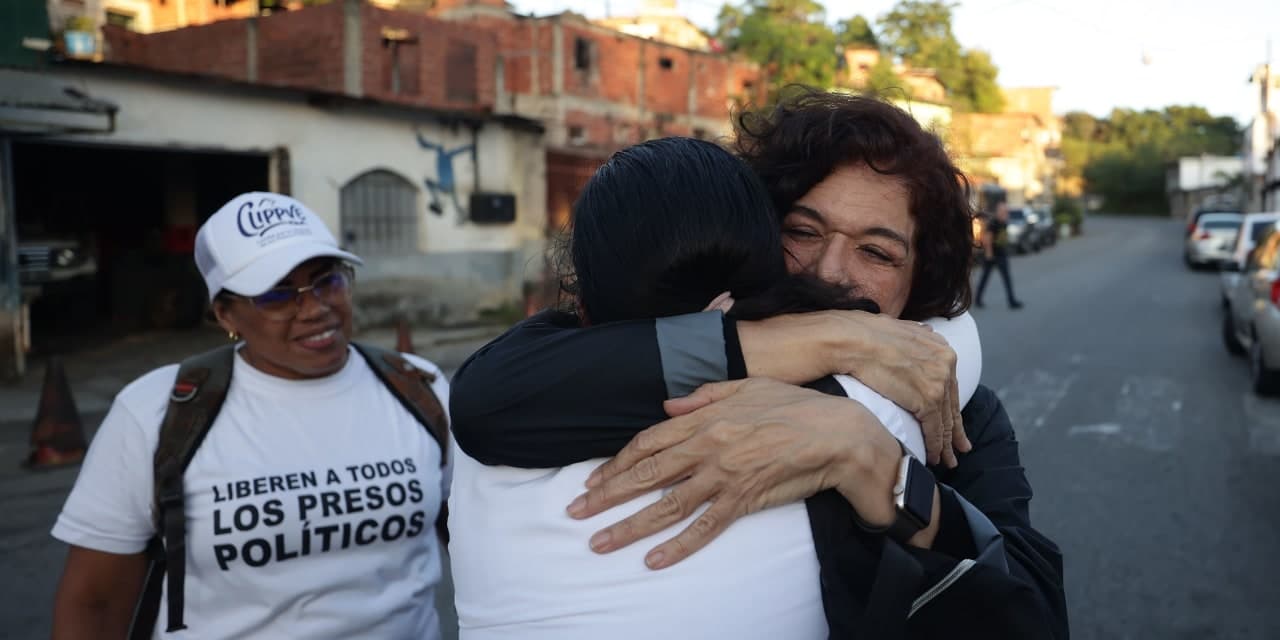
The identities of the released political prisoners are diverse, ranging from student activists and journalists to opposition leaders and former military officers. Their stories offer a glimpse into the human cost of Venezuela's political crisis. Many endured harsh prison conditions, including overcrowding, lack of medical care, and psychological abuse. Some were subjected to torture and other forms of cruel treatment.
The release of these individuals is not just a legal matter; it's a deeply emotional event for them, their families, and the broader Venezuelan society. The released prisoners carry with them the scars of their experiences, both physical and psychological. Their reintegration into society will be a complex process, requiring support and understanding. The government's willingness to provide this support will be a key indicator of its commitment to genuine reconciliation.
Furthermore, their experiences will undoubtedly shape their future political engagement. Some may become vocal advocates for human rights and democratic reform, while others may choose to withdraw from public life altogether. Regardless, their stories serve as a powerful reminder of the importance of protecting fundamental freedoms and holding those who violate them accountable.
4. Motivations Behind the Release: Genuine Reform or Calculated Strategy?
The motivations behind the release of political prisoners are a subject of intense debate. Is the government genuinely committed to democratic reform, or is this a calculated strategy to achieve other objectives? Several factors could be at play.
Firstly, the release could be aimed at easing international pressure. Venezuela has faced widespread condemnation for its human rights record and authoritarian practices. Releasing political prisoners could improve its image and potentially lead to the easing of sanctions. Secondly, the government may be seeking to divide the opposition. By releasing some prisoners while excluding others, it could sow discord and undermine the opposition's unity.
Thirdly, the release could be a tactical move to gain leverage in negotiations with the opposition and international actors. By offering concessions, the government may be seeking to extract concessions in return, such as recognition of its legitimacy or economic assistance. Economists are divided on whether this is a genuine attempt at reform or simply a cynical ploy to consolidate power. Some argue that the economic crisis is so severe that the government has no choice but to seek international assistance, necessitating a shift in its approach.
5. International Reaction: A Divided World Watches Closely
The international reaction to the release of political prisoners has been mixed. Some countries and organizations have welcomed the move as a positive step, while others have expressed skepticism and called for further reforms. The United States, for example, has maintained a cautious stance, emphasizing the need for free and fair elections and the restoration of democratic institutions. The European Union has also called for further progress on human rights and the rule of law.
Latin American countries are particularly divided, with some supporting the Venezuelan government and others condemning its authoritarian practices. The Lima Group, a coalition of Latin American nations, has been critical of the Maduro regime and has called for a return to democracy. However, countries like Cuba and Nicaragua have maintained close ties with Venezuela and have defended its government.
The international community's response will be crucial in shaping the future of Venezuela. Strong and coordinated pressure could encourage further reforms, while a divided response could embolden the government to continue its authoritarian practices. The key will be to strike a balance between encouraging progress and holding the government accountable for its actions.
6. Impact on Venezuelan Society: Hope, Fear, and Uncertainty
The release of political prisoners has had a profound impact on Venezuelan society, generating a mix of hope, fear, and uncertainty. For the families and friends of the released prisoners, it is a moment of immense joy and relief. After years of suffering and uncertainty, they are finally reunited with their loved ones.
However, the release also raises questions about the future. Will the government continue to release political prisoners? Will it respect human rights and the rule of law? Will it allow for free and fair elections? These questions weigh heavily on the minds of many Venezuelans. There's a pervasive sense that things could easily revert back to the status quo, or even worsen.
Furthermore, the release could exacerbate existing divisions within Venezuelan society. Some may see it as a sign of weakness on the part of the government, while others may view it as a genuine attempt at reconciliation. These differing perspectives could lead to further polarization and conflict. Anecdotal evidence from social media suggests a sharp divide in public opinion, with some celebrating the release as a victory for human rights and others denouncing it as a cynical ploy.
7. The Opposition's Dilemma: To Trust or Not to Trust?
The release of political prisoners presents the Venezuelan opposition with a significant dilemma: to trust or not to trust? On the one hand, welcoming the release could be seen as a sign of weakness or a tacit endorsement of the government. On the other hand, rejecting it outright could alienate potential allies and undermine efforts to build a broader coalition for democratic change.
The opposition must carefully calibrate its response, balancing the need to maintain its credibility with the desire to seize opportunities for progress. One possible strategy is to welcome the release while simultaneously demanding further concessions, such as guarantees of free and fair elections, the release of all political prisoners, and the restoration of democratic institutions.
Another challenge for the opposition is to maintain its unity in the face of the government's divide-and-conquer tactics. By releasing some prisoners while excluding others, the government could attempt to sow discord and undermine the opposition's cohesion. It is crucial for the opposition to resist these attempts and maintain a united front.
8. Economic Implications: Can Political Stability Spur Recovery?
Venezuela's economy has been in a state of collapse for years, plagued by hyperinflation, shortages of basic goods, and mass emigration. The release of political prisoners, while primarily a political event, could have significant economic implications.
If the release leads to greater political stability and improved international relations, it could pave the way for economic recovery. Increased foreign investment, reduced sanctions, and improved access to international credit could all help to stimulate growth. However, even under the most optimistic scenario, the recovery will be a long and arduous process. The economy has been so badly damaged that it will take years to rebuild.
Furthermore, the release of political prisoners is unlikely to be sufficient to solve Venezuela's economic problems. Fundamental reforms are needed to address the underlying causes of the crisis, such as the country's over-reliance on oil revenues, its corrupt institutions, and its lack of economic diversification. Pro Tip: Monitor the Bolivar's exchange rate and inflation figures closely. These will be key indicators of whether the political changes are translating into economic improvements. Economists are divided on whether the government is willing or able to implement these reforms.
9. The Friction: Skepticism, Concerns, and Potential Pitfalls
Despite the initial optimism surrounding the release of political prisoners, significant skepticism remains. Critics point to the government's history of broken promises and its continued repression of dissent. They argue that the release is simply a cosmetic measure designed to improve the government's image and deflect international pressure.
One major concern is the potential for the government to re-arrest released prisoners on trumped-up charges. The judicial system in Venezuela is deeply politicized, and there is little guarantee of due process. Another concern is the government's continued harassment and persecution of opposition leaders and activists.
Furthermore, the release of political prisoners does not address the underlying causes of Venezuela's political crisis. As long as the government continues to cling to power and suppress dissent, the country will remain deeply divided and unstable. The Amnesty bill, in its current form, may not adequately address the needs of the victims of political violence, and may not provide sufficient guarantees for their safety and security.
10. Future Scenarios: From Democratic Transition to Continued Authoritarianism
The future of Venezuela hinges on several key factors, including the government's willingness to implement genuine democratic reforms, the opposition's ability to unite and mobilize, and the international community's willingness to maintain pressure. Several scenarios are possible.
One scenario is a gradual transition to democracy, characterized by free and fair elections, respect for human rights, and the restoration of democratic institutions. This scenario would require a genuine commitment from the government to cede power and allow for political competition. Another scenario is a continuation of the status quo, with the government maintaining its grip on power through repression and manipulation. This scenario would likely lead to further economic decline and social unrest.
A third scenario is a descent into further chaos and violence, triggered by a breakdown of law and order or a military coup. This scenario would be catastrophic for Venezuela and could have destabilizing effects on the entire region. Predicting the future is impossible, but by analyzing the key factors at play, we can gain a better understanding of the possible trajectories for Venezuela.
11. Pro Tips: Navigating the Venezuelan Landscape
- Stay Informed: Follow reputable news sources and human rights organizations for the latest information on the situation in Venezuela. Avoid relying solely on government propaganda or biased media outlets.
- Exercise Caution: If you are traveling to Venezuela, exercise extreme caution and avoid engaging in political activities. Be aware of your surroundings and avoid areas known for unrest.
- Support Human Rights: Support organizations that are working to promote human rights and democracy in Venezuela. Donate to reputable charities that are providing humanitarian assistance to Venezuelans in need.
- Engage Diplomatically: If you are a government official or a representative of an international organization, engage diplomatically with the Venezuelan government to encourage reforms and promote dialogue.
- Understand the Nuances: The Venezuelan situation is complex and multifaceted. Avoid simplistic or ideological interpretations. Seek to understand the different perspectives and the historical context.
12. FAQ: Your Questions Answered
- Q: How many political prisoners were released?
- A: The exact number is still unclear, but estimates suggest hundreds of individuals have been freed as a result of the amnesty bill.
- Q: What are the conditions for their release?
- A: The conditions vary depending on the individual case, but generally, they involve refraining from political activities and reporting to authorities.
- Q: Is this a genuine sign of reform in Venezuela?
- A: It's too early to say definitively. The release of political prisoners is a positive step, but it needs to be followed by further reforms.
- Q: What can the international community do to help?
- A: The international community can maintain pressure on the Venezuelan government to respect human rights and allow for free and fair elections. It can also provide humanitarian assistance to Venezuelans in need.
- Q: What are the biggest challenges facing Venezuela?
- A: The biggest challenges facing Venezuela include political instability, economic collapse, and a humanitarian crisis.
13. Conclusion: A Cautious Path Forward
The release of political prisoners in Venezuela represents a potential turning point, but it is far from a guaranteed path to democracy. Skepticism is warranted, given the government's history and the complexities of the situation. However, dismissing the release outright would be a mistake. It is crucial to acknowledge the positive step while simultaneously demanding further progress and holding the government accountable.
The international community, the Venezuelan opposition, and the Venezuelan people must work together to seize this opportunity and push for genuine democratic change. The path forward will be fraught with challenges, but the potential rewards – a peaceful, prosperous, and democratic Venezuela – are well worth the effort. It's time for decisive action, informed by cautious optimism and a commitment to holding power accountable. We must actively monitor the situation, amplify the voices of those on the ground, and ensure that this moment is not squandered. Act now, before the window of opportunity closes.
Deep Dives Similar to This
Hong Kong court overturns Jimmy Lai's fraud conviction in surprise win. What does this mean for the city's autonomy and international business?
Former US Ambassador Peter Mandelson arrested in the UK over Jeffrey Epstein links. Misconduct in public office alleged. Political earthquake? Full analysis inside.
The rumored death of El Mencho could spark cartel wars & impact tourism in Mexico. Explore potential scenarios, economic fallout, & expert insights.