
Executive Summary
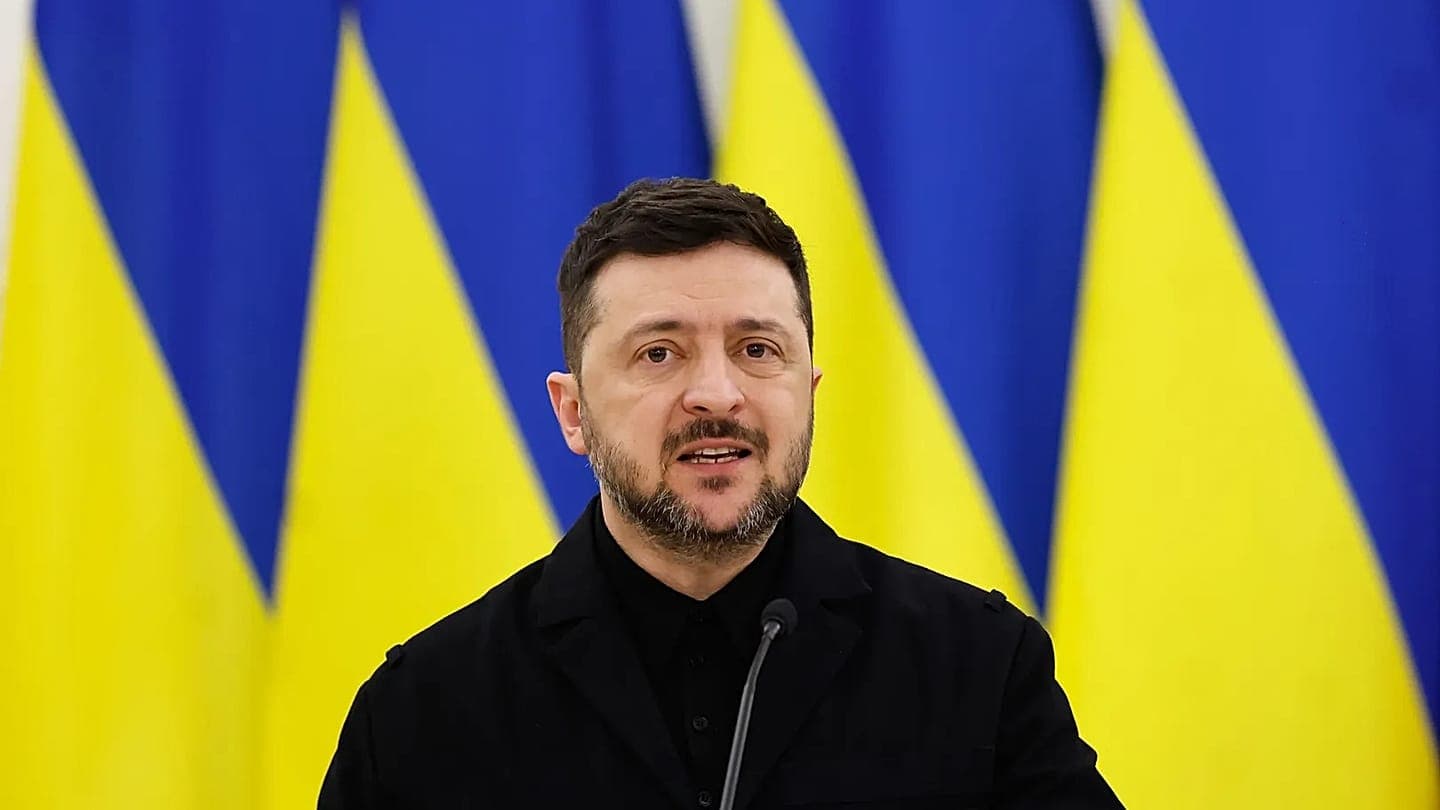
President Zelenskyy's ambitious push for Ukraine's European Union accession by 2027 is more than just political aspiration; it's a survival strategy. With the war raging, EU membership represents a beacon of stability, economic revitalization, and long-term security. This report examines the feasibility of this accelerated timeline, the challenges Ukraine faces, the potential impacts on the EU, and the geopolitical ramifications. We'll explore not just the political will, but also the necessary economic reforms, judicial overhauls, and alignment with EU standards required to make this happen. The stakes are incredibly high, and the path forward is fraught with obstacles.
Table of Contents
- Historical Context: Ukraine's EU Aspirations
- The 2027 Target: Ambitious or Realistic?
- Key Hurdles: Corruption, Rule of Law, and Economic Reform
- EU Enlargement Fatigue: A Reluctant Embrace?
- Geopolitical Ramifications: Russia's Response
- Economic Impact: Reconstruction and Integration
- The Human Cost: Hope and Uncertainty
- Expert Opinions: A Divided View
- Alternative Scenarios: What If Ukraine Doesn't Join?
- Pro Tips for Navigating the Uncertainty
- FAQ: Your Questions Answered
- Conclusion: A Pivotal Moment for Ukraine and Europe
Historical Context: Ukraine's EU Aspirations
Ukraine's desire to integrate with Europe is not new. It's a thread woven through the nation's history, from its post-Soviet independence to the Orange Revolution in 2004 and the Euromaidan Revolution in 2014. Each of these events underscored the deep-seated yearning for closer ties with the West and a rejection of Russian influence. The 2014 revolution, triggered by then-President Yanukovych's refusal to sign an Association Agreement with the EU, marked a turning point, leading to the annexation of Crimea and the ongoing conflict in eastern Ukraine. This historical context is crucial for understanding the current urgency behind Ukraine's EU bid. It's not just about economic benefits; it's about affirming Ukraine's identity and sovereignty.
The Association Agreement, signed in 2014 and fully implemented in 2017, provided a framework for closer political and economic cooperation. However, it fell short of full membership, fueling the desire for a more concrete commitment. The current war has amplified this desire, with Ukrainians seeing EU membership as the ultimate guarantee of security and stability. The EU has responded with unprecedented speed, granting Ukraine candidate status in June 2022, a move that would have been unthinkable just a few years prior.
However, history also provides a cautionary tale. Past attempts at reform in Ukraine have been hampered by corruption, political infighting, and a lack of institutional capacity. Overcoming these challenges will be essential if Ukraine is to meet the EU's stringent membership requirements. As one political analyst noted, "Ukraine's past is littered with missed opportunities. This time, they need to break the cycle."
The 2027 Target: Ambitious or Realistic?
Zelenskyy's 2027 target is undeniably ambitious. EU accession is a complex and lengthy process, typically taking many years, even for countries without the added challenge of an ongoing war. The fastest accession on record was Sweden, Finland, and Austria which took less than 2 years from application to membership. Croatia took nearly a decade. The speed at which Ukraine progresses depends on how quickly it can meet the EU's accession criteria, which cover a wide range of areas, including: political stability, functioning market economy, and the adoption of the EU's body of laws (acquis communautaire).
Several factors could work in Ukraine's favor. The EU has demonstrated a strong political will to support Ukraine, and the war has created a sense of urgency that could accelerate the process. Moreover, Ukraine has already made significant progress in aligning its legislation with EU standards under the Association Agreement. However, the scale of the challenges should not be underestimated. The war has devastated the Ukrainian economy and infrastructure, and corruption remains a persistent problem. Some within the EU are wary of fast-tracking Ukraine's membership, fearing it could set a precedent and undermine the integrity of the accession process.
Conversations in Brussels suggest a more realistic timeline might be closer to 2030, although officials are hesitant to publicly contradict Zelenskyy's target. The key will be sustained momentum on reforms and continued political support from the EU. If Ukraine can demonstrate tangible progress in key areas, the 2027 target, while challenging, may not be entirely unattainable.
Key Hurdles: Corruption, Rule of Law, and Economic Reform
Corruption is arguably the biggest obstacle standing in the way of Ukraine's EU accession. The country has long struggled with endemic corruption, which undermines the rule of law, discourages foreign investment, and erodes public trust. The EU has made it clear that tackling corruption is a top priority for Ukraine, and significant progress will be required before membership can be considered. This includes strengthening anti-corruption institutions, reforming the judiciary, and ensuring transparency in public procurement.
Rule of law is closely linked to the fight against corruption. A fair and independent judiciary is essential for enforcing laws, protecting property rights, and attracting investment. Ukraine's judicial system has been plagued by inefficiency, political interference, and a lack of public confidence. Reforming the judiciary will require a comprehensive overhaul, including the vetting of judges, the introduction of electronic case management systems, and increased judicial independence.
Economic reform is another crucial area. Ukraine needs to create a business-friendly environment that attracts foreign investment and promotes sustainable growth. This includes simplifying regulations, reducing red tape, and protecting intellectual property rights. The war has caused massive damage to the Ukrainian economy, and reconstruction will require significant investment. EU membership could provide access to structural funds and other forms of financial assistance, but Ukraine needs to demonstrate that it can effectively manage these resources.
EU Enlargement Fatigue: A Reluctant Embrace?
While the EU has shown strong support for Ukraine, there is a growing sense of enlargement fatigue within the bloc. Some member states are wary of further expansion, fearing it could strain the EU's budget, dilute its political influence, and exacerbate existing social and economic problems. The accession of countries like Romania and Bulgaria in 2007, while ultimately beneficial, revealed significant challenges in terms of corruption and institutional capacity, leaving some EU members hesitant to repeat the experience.
This skepticism is particularly pronounced in countries that are already struggling with economic challenges or facing rising populism. Concerns about migration, job displacement, and the potential for increased competition have fueled anti-EU sentiment in some quarters. The rise of nationalist parties in several member states has further complicated the enlargement process. Convincing these countries to support Ukraine's accession will require a delicate balancing act, demonstrating the benefits of enlargement while addressing legitimate concerns.
The EU also has to consider the impact of Ukraine's accession on its own institutions and decision-making processes. Ukraine is a large country with a significant population, and its membership would shift the balance of power within the EU. Some member states fear that Ukraine could become a major beneficiary of EU funds, potentially at the expense of other countries. These concerns need to be addressed through careful negotiations and a clear understanding of the long-term implications of enlargement.
Geopolitical Ramifications: Russia's Response
Ukraine's EU aspirations are seen by Russia as a direct threat to its sphere of influence. Russia views Ukraine as part of its historical and cultural orbit, and it has consistently opposed any moves that would bring Ukraine closer to the West. The current war is, in many ways, a manifestation of this geopolitical rivalry. Russia is determined to prevent Ukraine from joining the EU and NATO, seeing this as a red line.
Therefore, Ukraine's EU accession process will inevitably be met with resistance from Russia. This could take various forms, including military escalation, cyberattacks, disinformation campaigns, and economic pressure. Russia may also seek to destabilize Ukraine internally, supporting separatist movements and undermining the government's authority. The EU needs to be prepared to counter these threats and provide Ukraine with the support it needs to defend its sovereignty.
However, some analysts believe that Russia's opposition to Ukraine's EU membership may be weakening. The war has demonstrated the depth of Ukraine's commitment to the West, and it has become increasingly clear that Russia cannot control Ukraine by force. Moreover, Russia's own economy has been severely damaged by the war and sanctions, limiting its ability to exert influence in the region. It's plausible that Russia may eventually come to accept Ukraine's EU membership as a fait accompli, focusing instead on preserving its economic and security interests in other areas.
Economic Impact: Reconstruction and Integration
The economic impact of Ukraine's EU accession would be significant, both for Ukraine and for the EU. For Ukraine, membership would provide access to the EU's single market, structural funds, and other forms of financial assistance. This could help to stimulate economic growth, create jobs, and improve living standards. However, Ukraine would also need to adopt EU regulations and standards, which could impose costs on businesses and require significant investments in infrastructure.
The EU would also benefit from Ukraine's accession. Ukraine is a large country with a significant agricultural sector, and its membership would increase the EU's food security. Ukraine also has a skilled workforce and a growing IT sector, which could contribute to the EU's innovation and competitiveness. However, the EU would also need to provide financial assistance to Ukraine, which could strain the EU's budget. The integration of Ukraine's economy into the EU would also require careful management to avoid disruptions and ensure fair competition.
Economists are divided on whether Ukraine's accession would be a net positive for the EU. Some argue that the benefits would outweigh the costs, while others are more cautious. The key will be effective management of the integration process and a commitment from both Ukraine and the EU to implement the necessary reforms. Early estimates suggest the cost of rebuilding could be in the hundreds of billions of dollars, much of which the EU would be expected to contribute.
The Human Cost: Hope and Uncertainty
The human cost of the war in Ukraine is immeasurable. Millions of people have been displaced, and countless lives have been lost. The war has also taken a heavy toll on the mental and emotional well-being of Ukrainians. EU membership represents a beacon of hope for many Ukrainians, offering the promise of a better future. It symbolizes security, stability, and the opportunity to build a prosperous and democratic society.
However, the accession process is also fraught with uncertainty. Ukrainians are aware of the challenges that lie ahead, and they know that membership is not a guarantee of success. There are concerns about corruption, economic inequality, and the potential for political instability. Many Ukrainians are also worried about the impact of EU regulations on their livelihoods and traditions. Managing these expectations and addressing these concerns will be crucial for maintaining public support for the EU accession process.
We're seeing early adopters in the diaspora actively preparing for Ukraine's integration, from investing in Ukrainian businesses to fostering cultural exchange programs. This proactive engagement signals a deep-seated belief in Ukraine's European future, but it also underscores the need for clear communication and transparent decision-making to ensure that all Ukrainians feel included and empowered in the process.
Expert Opinions: A Divided View
Expert opinions on Ukraine's EU accession are divided. Some experts are optimistic about Ukraine's prospects, pointing to the country's strong commitment to reform and the EU's political will to support Ukraine. Others are more cautious, highlighting the challenges posed by corruption, the war, and enlargement fatigue within the EU. These conflicting views highlight the complexity and uncertainty surrounding Ukraine's EU ambitions.
"The EU has a moral obligation to support Ukraine," argues Dr. Anna Petrova, a political scientist at the Kyiv School of Economics. "But moral obligation doesn't always translate into policy. Ukraine needs to demonstrate real progress on reforms to convince skeptical member states." This sentiment is echoed by many who believe that Ukraine's success hinges on its ability to deliver tangible results.
Conversely, some analysts express concerns about the potential costs of enlargement. "Ukraine's accession would be a major undertaking for the EU," says Professor Thomas Schmidt, an economist at the University of Berlin. "The EU needs to carefully consider the financial implications and ensure that it has the resources to support Ukraine's integration." He isn't wrong. This perspective underscores the need for a pragmatic and realistic assessment of the challenges and opportunities associated with Ukraine's EU membership.
Alternative Scenarios: What If Ukraine Doesn't Join?
While Ukraine is determined to join the EU, it's important to consider alternative scenarios. What if Ukraine's accession is delayed or even rejected? The consequences could be significant, both for Ukraine and for the EU. A failure to join the EU could lead to disillusionment and instability in Ukraine, undermining the country's democratic reforms and making it more vulnerable to Russian influence. It could also damage the EU's credibility and weaken its ability to project its values in the region.
One alternative scenario is a closer relationship with the EU short of full membership. This could involve enhanced trade agreements, increased political cooperation, and greater access to EU programs. However, this would fall short of the security guarantees and economic benefits of full membership. Another possibility is a return to the status quo ante, with Ukraine remaining in a geopolitical gray zone, caught between the West and Russia. This would be the least desirable outcome, as it would perpetuate instability and leave Ukraine vulnerable to external aggression.
The possibility of Ukraine not joining the EU also opens the door for increased Chinese influence in the region. China has been steadily expanding its economic and political presence in Eastern Europe, and a weakened or isolated Ukraine could become a prime target for Chinese investment and influence. This could further complicate the geopolitical landscape and challenge the EU's role as a regional power.
Pro Tips for Navigating the Uncertainty
- Focus on practical reforms: Don't get bogged down in grand pronouncements. Concentrate on implementing concrete reforms that improve governance, reduce corruption, and strengthen the rule of law. This will demonstrate tangible progress and build confidence among EU member states.
- Engage with skeptical voices: Don't ignore concerns about enlargement fatigue. Engage in open and honest dialogue with skeptical member states, addressing their concerns and demonstrating the benefits of Ukraine's accession. Find common ground.
- Leverage the diaspora: The Ukrainian diaspora is a powerful asset. Engage with diaspora communities to promote Ukraine's cause and build support for EU membership. It will help increase outside pressure.
- Prepare for Russian interference: Be prepared for Russian interference and disinformation campaigns. Counter these threats with transparency, accurate information, and robust cybersecurity measures. Don't take anything at face value.
- Diversify economic partnerships: Don't rely solely on the EU for economic support. Diversify economic partnerships and attract investment from other sources. Plan for the worst, hope for the best.
FAQ: Your Questions Answered
Q: What are the main benefits of EU membership for Ukraine?
A: Access to the EU's single market, structural funds, increased foreign investment, enhanced security, and greater political influence.
Q: What are the main challenges facing Ukraine's EU accession?
A: Corruption, the war with Russia, economic instability, enlargement fatigue within the EU, and the need to implement extensive reforms.
Q: How long does the EU accession process typically take?
A: It varies, but typically takes several years, even for countries without the added challenge of an ongoing war. Croatia took almost a decade.
Q: What is the EU's position on Ukraine's membership?
A: The EU has granted Ukraine candidate status and has expressed strong support for its European aspirations. However, some member states are more cautious than others.
Q: What can Ukrainians do to support the EU accession process?
A: Demand accountability from their leaders, participate in civil society initiatives, support reform efforts, and engage in open dialogue about the challenges and opportunities of EU membership.
Conclusion: A Pivotal Moment for Ukraine and Europe
Zelenskyy's push for Ukraine's EU accession by 2027 is a bold gamble, but one that reflects the existential stakes facing the nation. While the challenges are immense – corruption, war, and EU skepticism – the potential rewards are even greater: a secure, stable, and prosperous Ukraine integrated into the heart of Europe. This is not just about Ukraine's future; it's about the future of Europe itself. The EU has a historic opportunity to demonstrate its commitment to its values and its willingness to stand by a nation fighting for its freedom. Whether Ukraine succeeds or falters in this endeavor will shape the geopolitical landscape for decades to come. Therefore, it is essential to actively monitor developments, engage in informed discussions, and support initiatives that promote transparency, accountability, and progress toward a more unified and secure Europe. The moment demands nothing less.
Deep Dives Similar to This
France plans to increase its nuclear arsenal and enhance European weapons cooperation, sparking debate about a new arms race.
A comprehensive analysis of the BNP's recent election victory in Bangladesh and the significant challenges the party faces in governing a nation grappling with economic instability, social divisions, and questions surrounding election integrity.
Pakistan declares 'open war' on Afghanistan after cross-border strikes. Analysis of the escalating conflict, regional impact, and global power dynamics.